
Learning to drive involves much more than steering a vehicle, changing gears or following traffic signs. A capable driver must constantly observe the surroundings, recognise potential risks and make decisions that keep everyone on the road safe. Developing these abilities takes time, practice and the right professional guidance.
For learners looking for driving lessons in Brentford, developing strong road awareness is particularly valuable. The area offers a mixture of residential streets, busy roads, junctions, roundabouts and locations where pedestrians, cyclists and other vehicles share limited road space. Learning to respond appropriately to these situations can help you become a more adaptable and responsible driver.
At Testbusters Driving School, structured driving tuition helps learners develop practical abilities and understand how to make informed decisions in everyday traffic conditions.
1. Understand What Is Happening Around Your Vehicle
One of the most important driving skills is learning to observe beyond the road immediately in front of you. Beginners sometimes concentrate too heavily on steering and vehicle controls, leaving less attention for other road users and changing conditions.
Good observation involves looking ahead, checking mirrors regularly and understanding what is happening around the vehicle.
During your lessons, you can develop habits such as:
- Looking further ahead to identify developing situations.
- Checking mirrors before changing speed or direction.
- Watching for pedestrians approaching crossings.
- Recognising cyclists and motorcyclists in surrounding traffic.
- Checking blind spots when required.
- Maintaining awareness of vehicles behind and alongside you.
These habits help you understand the wider traffic environment instead of reacting only when something happens directly in front of the car.
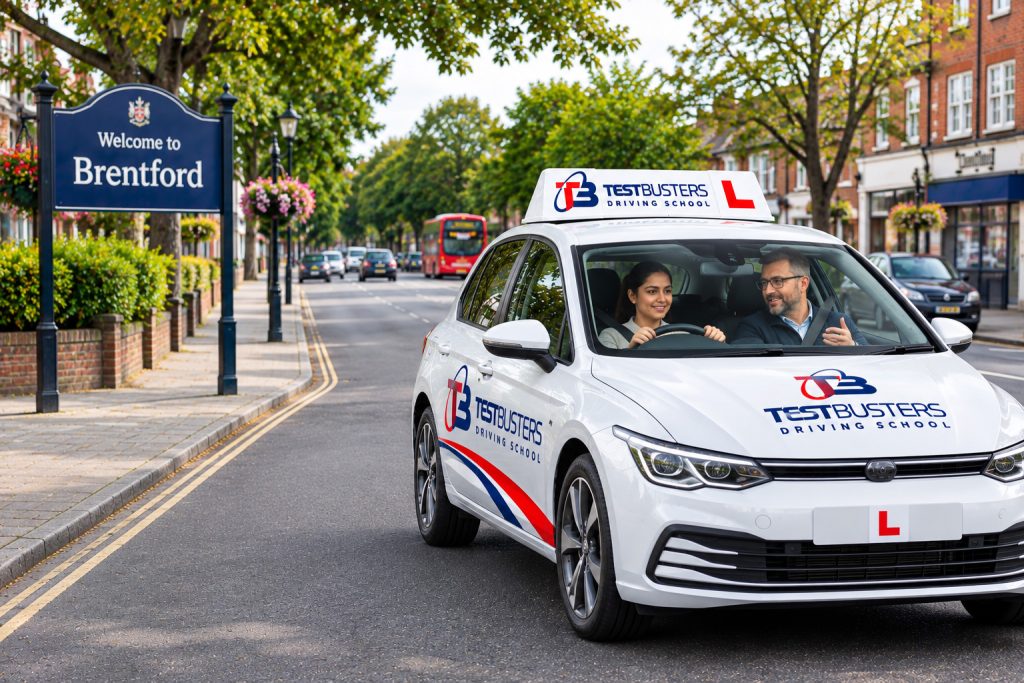
2. Learn to Anticipate Hazards Before They Develop
Hazard anticipation means recognising situations that could become dangerous and adjusting your driving before they create a problem.
For example, when approaching a row of parked vehicles, you should consider whether someone might open a car door or step into the road. Near a pedestrian crossing, you should be prepared for people who may be waiting to cross.
Brentford’s varied road environment gives learners opportunities to recognise different types of potential hazards.
Your instructor can help you identify:
- Pedestrians who may enter the road unexpectedly.
- Vehicles emerging from side roads.
- Children or cyclists near parked vehicles.
- Traffic slowing down ahead.
- Restricted visibility around bends and junctions.
- Changes in road conditions and traffic flow.
The objective is to develop a habit of thinking ahead. Recognising a potential hazard early gives you more time to respond safely.
3. Develop Better Judgement at Busy Junctions
Junctions require several driving skills to work together. You need to understand road signs, assess traffic priorities, position the vehicle correctly and decide when it is safe to proceed.
For a learner, the challenge is often managing all these tasks without becoming rushed.
During professional driving tuition, you can gradually practise different junction situations, including:
Approaching junctions: Learn to reduce speed appropriately, observe road markings and assess visibility before reaching the junction.
Emerging safely: Understand how to judge gaps in traffic and avoid taking unnecessary risks when joining another road.
Turning left and right: Develop suitable positioning, signalling and observation routines before completing a turn.
Responding to other road users: Recognise pedestrians, cyclists and approaching vehicles that may affect your intended movement.
With regular practice, junction decisions can become more organised and consistent.
4. Improve Your Confidence Around Roundabouts
Roundabouts can be challenging because vehicles approach from different directions and traffic conditions can change quickly.
Rather than treating every roundabout as a memorised exercise, learners should understand the principles behind safe navigation.
Important skills include:
- Reading signs and road markings before entering.
- Choosing an appropriate approach speed.
- Selecting the correct lane where applicable.
- Checking traffic approaching from the right.
- Using indicators when appropriate.
- Maintaining awareness of vehicles in neighbouring lanes.
- Exiting safely while checking for other road users.
Your instructor can introduce roundabouts progressively, allowing you to understand each stage before handling more demanding situations.
The goal is to make decisions based on the actual traffic conditions rather than relying entirely on memorised routes.
5. Understand Safe Driving Around Parked Vehicles
Parked vehicles can create narrow passages, restricted visibility and unexpected hazards. Learning to manage these situations is an important part of everyday driving.
When approaching parked cars, you need to assess the available road space, look for oncoming traffic and decide whether there is enough room to proceed safely.
You should also watch for:
- Vehicle doors opening.
- Pedestrians stepping out from between cars.
- Cyclists travelling close to parked vehicles.
- Vehicles reversing from parking spaces.
- Delivery vehicles temporarily obstructing the road.
Your instructor can help you understand when to slow down, wait or adjust your road position.
Good judgement is especially important when there is not enough room for two vehicles to pass comfortably.
6. Build Awareness of Pedestrians and Cyclists
Drivers share the road with people who are more vulnerable in traffic. Pedestrians and cyclists may be difficult to see, particularly near junctions, parked vehicles and areas with restricted visibility.
Learners should develop a habit of checking carefully before turning, changing lanes or moving past other road users.
You should also understand the importance of leaving suitable space when passing cyclists and being prepared to stop when necessary.
During lessons, your instructor can explain how to recognise vulnerable road users and respond appropriately in different situations.
These skills are essential not only for passing the practical driving test but also for becoming a considerate driver after obtaining your licence.
7. Learn to Manage Traffic Pressure Without Rushing
Busy traffic can make new learners feel pressured. Vehicles behind may be waiting, junctions may become congested and traffic signals may change while you are preparing to move.
However, safe driving should never depend on rushing to satisfy another road user.
You need to learn how to:
- Maintain a suitable following distance.
- Control speed in changing traffic.
- Wait patiently when a safe opportunity is unavailable.
- Avoid sudden braking or acceleration.
- Stay focused when other drivers behave impatiently.
- Make decisions based on road conditions and safety.
Your instructor can help you develop calm responses through practical experience and constructive feedback.
8. Make Every Driving Lesson Purposeful
Consistent lessons are more effective when you understand what each session is intended to improve.
Instead of simply repeating familiar routes, you can work with your instructor to identify areas that need attention.
For example, one lesson may concentrate on junction approaches, while another may focus on roundabouts, parking or observation routines.
After each session, consider asking:
- Which skill did I perform well today?
- Where did I need additional guidance?
- Was my observation effective?
- Did I choose an appropriate speed?
- What should I practise during the next lesson?
This approach helps you understand your progress and take greater responsibility for your learning.
9. Choose Driving Lessons That Support Your Learning Goals
The quality of your driving instruction can influence how effectively you develop your skills. Beginners need clear explanations, constructive feedback and opportunities to practise different road situations.
When selecting a driving school, consider instructor qualifications, lesson flexibility, vehicle options and the way your progress is assessed.
Testbusters Driving School provides tuition with DVSA-approved instructors and offers manual and automatic driving lesson options. Learners can discuss suitable training arrangements according to their experience, availability and goals.
You can explore the driving lessons in Brentford page to learn more about the school’s local tuition.
You can also visit the Testbusters Driving School website to explore its services and available learning options.
10. Turn Driving Skills into Lifelong Habits
Passing a driving test is an important achievement, but safe driving continues long after the test is completed.
The habits developed during lessons should become part of your everyday routine. This includes checking mirrors, anticipating hazards, maintaining suitable distances, understanding road priorities and adapting to changing conditions.
As you gain experience, you will encounter unfamiliar roads, different traffic patterns and situations that require independent judgement.
A strong foundation in observation and decision-making can help you manage these experiences more responsibly.
Remember that good driving is not about reaching a destination as quickly as possible. It is about making safe, informed decisions throughout every journey.
Conclusion
Professional driving lessons in Brentford can help you develop much more than basic vehicle control. By improving observation, hazard anticipation, junction judgement and awareness of other road users, you can build the skills needed to handle a wider range of driving situations.
Regular practice and constructive instruction allow you to understand your strengths, improve weaker areas and become more independent behind the wheel.
Whether you are beginning your driving journey or improving existing skills, focus on developing habits that support safe driving for life.
Ready to Improve Your Driving Skills in Brentford?
Take the next step towards becoming a confident and responsible driver with Testbusters Driving School. Discuss your learning requirements and explore suitable manual or automatic driving lesson options.
Contact Testbusters Driving School
- Phone: 07813 00 00 02
- Email: info@testbusters.co.uk
- Website: https://testbusters.co.uk/
Learn with purpose. Develop better road awareness. Drive with confidence.
Frequently asked questions
1. Are driving lessons in Brentford suitable for beginners?
Yes. Beginners can start with basic vehicle controls and gradually develop skills such as steering, observation, road positioning and handling different traffic situations.
2. What driving skills should I develop in Brentford?
Important skills include hazard awareness, junction judgement, roundabout navigation, safe positioning, mirror checks and awareness of pedestrians and cyclists.
3. Does Testbusters offer manual and automatic driving lessons in Brentford?
Testbusters offers manual and automatic driving tuition. Contact the school to discuss suitable lesson options and availability.
4. How can I become more confident at busy junctions?
Practise approaching junctions at an appropriate speed, observing traffic, understanding priorities and choosing safe opportunities to proceed. Professional instruction can help you develop these skills progressively.
5. How do I book driving lessons in Brentford?
Contact Testbusters Driving School on 07813 00 00 02 or email info@testbusters.co.uk to discuss lesson arrangements.