
Learning to drive is about developing the ability to handle real situations safely, not simply learning how to operate a car. For people searching for driving lessons Brentford, the right training can help you build practical skills that gradually become natural habits behind the wheel.
Brentford provides a varied driving environment, with residential streets, busier urban roads, junctions, roundabouts and routes carrying different levels of traffic. This variety can give learners opportunities to develop adaptable driving skills rather than becoming comfortable with only one type of road.
Professional tuition can help you progress from basic vehicle control to making independent decisions in changing traffic conditions.
What Makes a Good Driving Lesson?
A useful driving lesson should have a clear purpose.
Rather than spending every session simply driving around familiar roads, your instructor can identify particular skills that need development and introduce situations that challenge you at an appropriate pace.
For a beginner, this may mean learning basic vehicle control and observation. For a more experienced learner, it could involve independent driving, complex junctions, parking or preparation for the practical test.
The objective is consistent progress without introducing situations before you are ready for them.
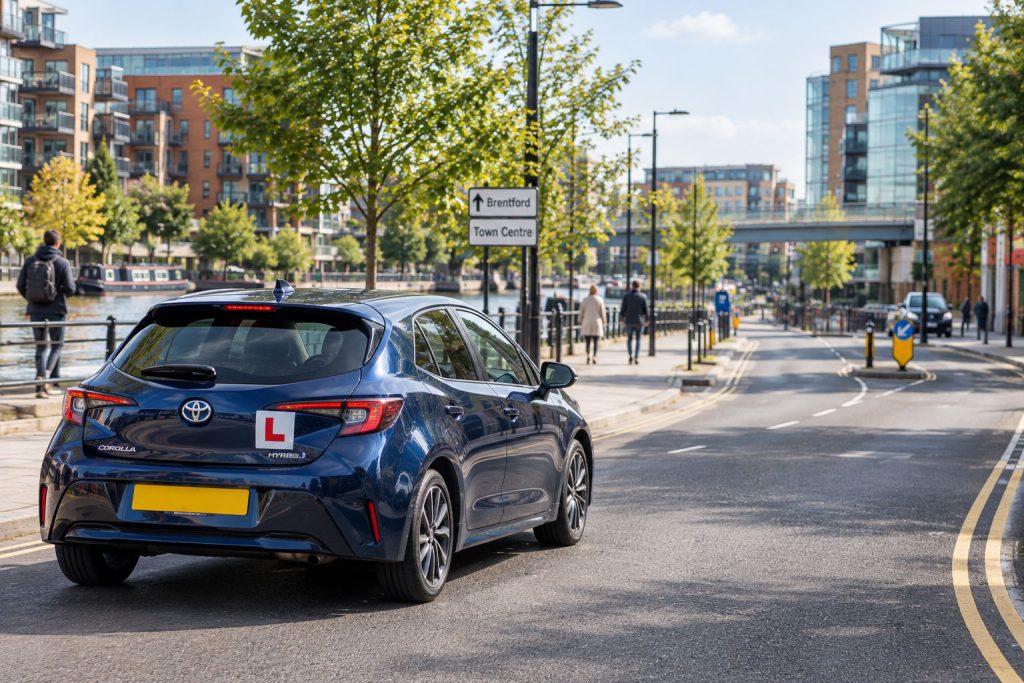
Building Strong Vehicle-Control Skills
Vehicle control is the foundation of everything else you do on the road.
Learners need to become comfortable with steering, braking, acceleration and maintaining an appropriate speed. Manual learners also need to develop clutch and gear control, while automatic learners can concentrate more immediately on steering, observation and traffic awareness.
These skills should gradually become automatic. The less mental effort required for basic vehicle control, the more attention you can give to the road around you.
Developing Better Observation
Good observation is one of the most important skills you can develop during your driving lessons.
You need to understand what is happening ahead, behind and around your vehicle while also anticipating what other road users might do next.
This includes checking mirrors, watching pedestrians and cyclists, identifying parked vehicles, noticing road signs and recognising potential hazards before they become immediate problems.
Looking Beyond the Immediate Situation
Effective drivers do not only respond to what is directly in front of them.
For example, seeing a pedestrian approaching a crossing early gives you more time to adjust your speed. Spotting a vehicle preparing to emerge from a side road can help you anticipate its movement.
Your instructor can gradually teach you to identify these situations earlier and plan your response.
Learning to Handle Different Brentford Road Environments
One benefit of learning locally is gaining experience with different types of roads.
Residential streets can help you practise speed control, meeting other vehicles and dealing with parked cars. Busier routes introduce greater demands on observation and planning.
Junctions and roundabouts require you to assess traffic, understand priorities and decide when it is safe to proceed.
As your experience increases, your instructor can introduce more complex environments so that your confidence develops alongside your ability.
From Following Instructions to Making Decisions
At the beginning of your training, your instructor will naturally provide frequent guidance.
As you improve, that guidance should gradually reduce.
You may start by being told when to turn or which lane to use. Later, you may be asked to follow road signs, choose an appropriate route or respond independently to changing traffic conditions.
This transition is important because independent driving requires you to make decisions without someone constantly telling you what to do.
Why Local Driving Experience Matters
A learner who becomes comfortable only on one familiar route may struggle when faced with an unfamiliar road.
This is why varied practice matters.
Learning in Brentford and the surrounding West London area can expose you to different road layouts, traffic patterns and driving conditions. Testbusters currently lists Brentford among its West London service areas.
The purpose is not to memorise specific roads. Instead, you should learn how to apply observation, positioning and planning skills wherever you drive.
Choosing Manual or Automatic Driving Lessons
Your choice of vehicle can influence how you learn.
Manual driving requires coordination between the clutch, gears, accelerator and steering. This can take additional practice, particularly when you are still learning to process traffic information.
Automatic vehicles remove manual gear changes and clutch control. This can allow learners to focus more heavily on observation, positioning, speed and decision-making.
Testbusters provides both manual and automatic vehicles, allowing learners to choose an option that suits their circumstances.
Whichever transmission you choose, professional instruction remains important because safe driving involves considerably more than vehicle control.
Making Progress Between Lessons
Your progress does not stop when a lesson ends.
If you have access to suitable supervised practice, additional driving experience can reinforce techniques introduced by your instructor.
Even when you are not driving, you can improve your understanding by observing how experienced drivers approach junctions, anticipate hazards and position the vehicle.
During lessons, ask questions whenever you are unsure about a particular decision. Understanding why something is done can make it easier to apply the principle in a completely different situation.
Learning Parking and Manoeuvres Properly
Parking manoeuvres are an important part of becoming an independent driver.
However, successful manoeuvring should not depend entirely on memorising fixed steering movements.
You need to understand observation, vehicle position, speed and surrounding hazards. Your instructor can help you develop a repeatable method while also teaching you how to adapt when the available space or surroundings are different.
This is particularly useful when you eventually need to park somewhere you have never visited before.
Preparing for Busy Traffic
As your skills develop, lessons can introduce increasingly demanding traffic conditions.
Busy roads require you to process more information in less time. You may need to monitor vehicles approaching from several directions, identify lane changes, respond to traffic lights and maintain a safe following distance.
The answer is not simply to drive slowly. You need to learn how to anticipate situations early enough to make controlled decisions.
This is where progressive training becomes valuable.
Supporting Nervous Learners
Some learners feel comfortable almost immediately, while others need considerably more time to develop confidence.
There is no single correct pace for everyone.
A patient instructor can break challenging situations into manageable stages, allowing you to develop familiarity before increasing the difficulty.
Testbusters states that its instructors provide adaptable tuition and support nervous learners, while its lessons are designed around individual requirements.
If you are nervous, communicating this to your instructor can help them structure lessons around the areas where you need the most support.
Weekly Lessons or Intensive Training?
There is no universal schedule that works for every learner.
Weekly lessons can provide consistent development while fitting around work, education and personal commitments.
An intensive driving course may suit someone who has more availability and prefers concentrated training. A semi-intensive approach can provide another option between traditional weekly lessons and a fully intensive programme.
Testbusters offers weekly, semi-intensive and intensive training options.
The important consideration is whether your chosen schedule gives you enough opportunity to understand, practise and consolidate each skill.
Choosing a Driving Instructor in Brentford
Your instructor will play an important role throughout your training.
When considering a driving instructor Brentford, look for someone who can explain concepts clearly, provide constructive feedback and adjust lessons according to your progress.
It is also useful to consider whether the instructor offers the type of vehicle and lesson schedule you require.
Testbusters states that its instructors are DVSA-approved, qualified and experienced, and its vehicles are equipped with dual controls.
A good learning relationship should allow you to ask questions, acknowledge areas that need improvement and gradually become more independent.
Developing Skills Beyond the Driving Test
Passing your practical test is an important milestone, but it should not be treated as the final stage of learning.
Once you are driving independently, you may encounter unfamiliar roads, night driving, motorway journeys, different weather conditions and situations that were not part of your regular learner routes.
Additional training such as refresher driving lessons, motorway tuition or a Pass Plus course can help drivers continue developing their experience.
The most useful outcome of professional driving tuition is not simply completing a test. It is developing the judgement and awareness needed to continue learning after you receive your licence.
What Should You Look for in Driving Lessons?
Before booking, consider whether the driving school can provide:
- Professional and appropriately qualified instructors
- Manual and/or automatic training according to your needs
- Flexible lesson schedules
- Progressive skill development
- Practical test preparation
- Support for nervous learners
- Opportunities to practise different road environments
- Additional training after passing where required
It is also worth asking how lessons are structured and how your progress will be reviewed.
A clear learning plan can help you understand what you are currently working on and what skills you need to develop next.
Conclusion
Choosing suitable driving lessons Brentford is about finding training that helps you develop practical ability step by step.
Strong driving skills come from combining vehicle control with observation, planning, hazard awareness and independent decision-making. As your experience grows, varied road practice can help you become comfortable adapting to situations instead of relying on familiar routes.
Whether you are beginning from scratch, preparing for your practical test or returning to driving after a break, structured professional tuition can provide a useful framework for your development.
Testbusters provides driving tuition in Brentford with DVSA-approved instructors, manual and automatic options and flexible training programmes.
Call to Action
Ready to Start Your Driving Journey in Brentford?
Book your driving lessons with Testbusters and start developing the practical skills, awareness and confidence needed for independent driving. Contact the team today to discuss your lesson requirements and choose a training schedule that suits you.