
Learning to drive is a valuable step towards greater independence. Whether you want to travel to work, attend college, manage everyday responsibilities or enjoy more freedom, gaining the ability to drive can open up new opportunities. However, for someone who has never driven before, knowing where to begin can feel challenging.
Professional driving classes for beginners in Isleworth provide a structured way to understand the vehicle, develop essential driving techniques and gradually become comfortable on the road. With the right instruction, each lesson can help you build another important skill rather than feeling pressured to learn everything at once.
At Testbusters Driving School, beginner learners can receive guidance designed around their experience, learning pace and individual requirements. The objective is to help you develop the practical ability and judgement needed for safe, independent driving.
1. Your First Driving Lesson: Understanding the Basics
Your first lesson is an opportunity to become familiar with the vehicle and understand how driving works. You do not need previous experience to get started.
An instructor will normally begin by introducing the main controls and explaining how to prepare before driving. You can learn how to adjust the seat, position the mirrors, understand the dashboard and establish a comfortable driving position.
These small details are important because a suitable driving position helps you maintain control, see the road clearly and operate the vehicle comfortably.
Your first lesson may also introduce:
- The accelerator, brake and clutch pedals.
- Steering wheel operation.
- Gear selection in a manual vehicle.
- Indicator and light controls.
- Mirror positioning and basic observations.
- Safe procedures before moving off.
The instructor can explain each control and give you time to understand its purpose before progressing to more practical activities.
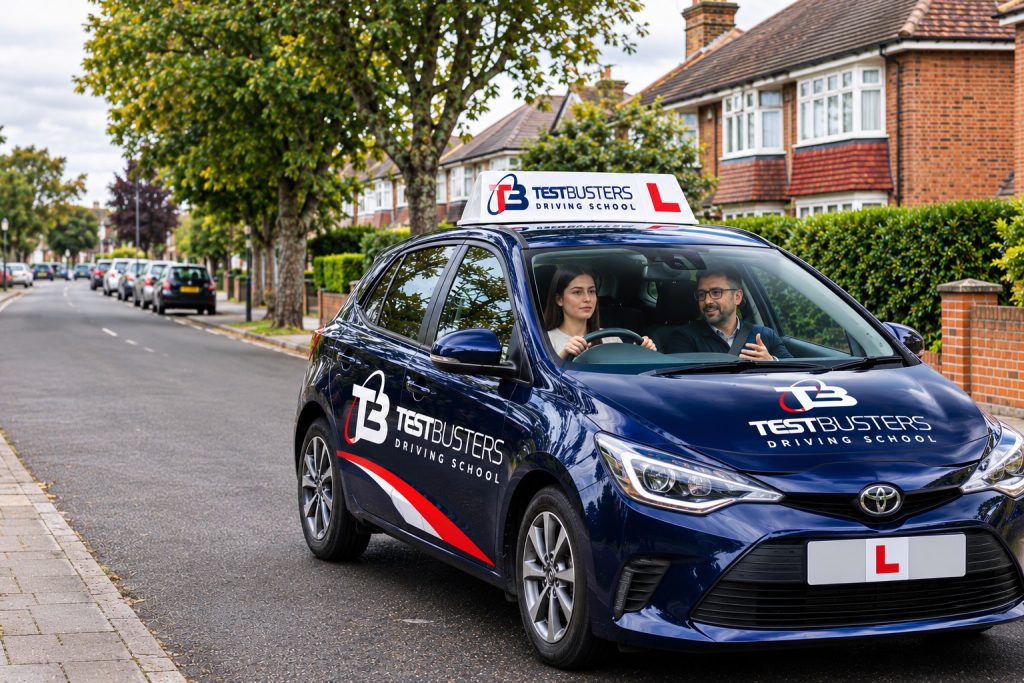
2. Developing Vehicle Control Step by Step
Vehicle control is one of the first major skills beginners need to develop. Before dealing with complex traffic situations, you should become comfortable controlling the car at different speeds.
Learning to Move Off and Stop
Moving off safely involves more than pressing the accelerator. You need to check your surroundings, understand the traffic situation, select the appropriate gear where necessary and move away smoothly.
Stopping requires similar attention. You should learn how to judge when to reduce speed, apply the brake progressively and bring the vehicle to a controlled stop.
With repeated practice, these actions can become smoother and more consistent.
Understanding Clutch and Gear Control
For manual learners, operating the clutch and changing gears can take time to master. You may initially experience hesitation or difficulty coordinating the pedals.
A structured lesson helps you understand the clutch biting point, practise changing gears and recognise when different gears are appropriate.
Automatic learners do not need to manage a clutch or manual gear changes. This allows them to concentrate more directly on steering, braking, observation and road awareness.
3. Developing Observation Habits from the Beginning
Good observation is essential for safe driving. Beginners should develop the habit of checking their surroundings before making decisions.
This includes understanding when to use mirrors, checking blind spots where necessary and looking carefully for pedestrians, cyclists and other vehicles.
For example, before moving away from the kerb, you need to assess what is happening around the car. Before changing direction, you must understand whether other road users could be affected.
Your instructor can help you practise a consistent observation routine and understand how it relates to different driving situations.
As your experience increases, the aim is to make these checks naturally without needing constant reminders.
4. Learning to Handle Different Road Situations in Isleworth
Driving requires you to respond to the environment around you. A quiet road, a busy junction and a roundabout all demand different levels of observation and decision-making.
As your basic vehicle control improves, beginner classes can gradually introduce more varied road situations around Isleworth.
Residential Streets
Residential roads provide opportunities to practise low-speed control, meeting oncoming traffic and responding to parked vehicles.
You can learn how to maintain suitable road positioning, identify potential hazards and give other road users enough space.
Junctions and Traffic Lights
Junctions require careful observation and good judgement. Beginners need to understand road markings, signs, traffic priorities and when it is safe to proceed.
Traffic lights also introduce the importance of anticipating changes and responding calmly without rushing.
Roundabouts
Roundabouts involve several skills working together, including approach speed, lane positioning, mirror checks, signalling and awareness of other vehicles.
Your instructor can introduce these situations progressively, helping you understand how to approach and navigate them safely.
The aim is to develop the ability to assess each situation rather than simply memorising a particular route.
5. Choosing Between Manual and Automatic Driving Classes
One of the decisions beginners need to make is whether to learn in a manual or automatic vehicle. Both options can help you develop safe driving skills, but the learning experience is different.
Manual driving classes
Manual lessons teach you to operate the clutch, select gears and coordinate vehicle controls. This requires additional practice, particularly when moving off, stopping and driving at lower speeds.
Learning manual can provide flexibility to drive both manual and automatic cars, subject to the relevant licence conditions.
Automatic driving classes
Automatic lessons remove the need to operate a clutch or change gears manually. Beginners can focus more on steering, speed control, observation, road positioning and decision-making.
The right choice depends on your preferences, future driving requirements and comfort level. A professional instructor can explain the differences and help you decide which option suits your goals.
6. Understanding Progress Through Each Stage of Learning
Learning to drive is a gradual process. Progress should be based on your developing ability, not simply the number of lessons completed.
A structured approach can help you understand what you have achieved and what needs further practice.
Your learning journey may include:
1. Vehicle familiarisation: Understanding the controls and preparing the car correctly.
2. Basic vehicle movement: Practising moving off, stopping, steering and speed control.
3. Road awareness: Developing mirror routines, observations and hazard recognition.
4. Traffic situations: Learning to handle junctions, roundabouts and changing road conditions.
5. Manoeuvres: Practising parking and reversing while maintaining effective observation.
Independent driving: Following directions, reading road signs and making decisions with less instructor assistance.
Your instructor should provide feedback throughout this process. Understanding what went well and what needs improvement makes each lesson more productive.
7. Why Consistent Practice Matters for Beginners
Driving skills improve through regular practice. If you leave long gaps between lessons, you may need additional time to become comfortable with techniques you previously practised.
Where possible, choose a lesson schedule that fits your routine and allows you to maintain steady progress.
After each class, take a moment to think about the skills you covered. You can also ask your instructor which areas deserve more attention during the next session.
Useful questions include:
- Which driving technique should I practise more?
- Am I checking my mirrors at the right time?
- Is my speed appropriate for the road conditions?
- What should I focus on during my next lesson?
Remember that mistakes are part of learning. The important thing is to understand why something happened and how to improve your response.
8. Finding a Beginner-Friendly Driving School in Isleworth
Choosing a suitable driving school is an important part of your learning experience. Beginners benefit from clear explanations, patient instruction and lessons that progress according to their ability.
Before choosing a provider, consider the following:
- Instructor qualifications: Check that your instructor is appropriately qualified and approved by the DVSA.
- Teaching approach: Look for clear explanations and constructive feedback.
- Vehicle options: Check whether manual and automatic lessons are available.
- Lesson flexibility: Consider whether the available schedules suit your routine.
- Learning progression: Choose structured tuition that helps you build skills in manageable stages.
Testbusters Driving School provides driving tuition across Isleworth and other West London locations. The school offers manual and automatic learning options, along with weekly, semi-intensive and intensive training arrangements.
You can explore the Testbusters Driving School website to learn more about available driving lessons and training options.
9. Preparing Yourself Before Every Driving Class
A little preparation can help you make better use of your lesson time.
Try to arrive on time, wear comfortable footwear and bring any questions from your previous session. Avoid distractions and give yourself enough time to concentrate.
You should also be willing to communicate with your instructor. If a particular manoeuvre makes you uncomfortable or a road situation feels confusing, explain what you are experiencing.
A good learning environment allows you to ask questions, practise carefully and improve without feeling rushed.
You can also explore the Testbusters driving school blog for additional driving-related information and learner guidance.
10. Building Confidence for Independent Driving
The purpose of beginner driving classes is not simply to prepare you for a driving test. You also need to develop the ability to make safe decisions when driving without an instructor beside you.
This means learning to recognise hazards, understand road priorities, maintain appropriate speed and respond to unexpected situations.
As you progress, your instructor can gradually reduce direct guidance and encourage you to take greater responsibility for your driving decisions.
Eventually, you should be able to approach familiar and unfamiliar roads with a clear understanding of what is happening around you.
Confidence comes from preparation, practice and good judgement. Developing these qualities from your first lesson can help you become a more responsible driver.
Conclusion
Starting driving classes for beginners in Isleworth is an important step towards gaining independence and learning a valuable life skill. A well-structured learning experience helps you understand vehicle controls, develop observation habits, manage different road situations and make safer decisions.
Every learner progresses at a different pace. With regular practice, clear instruction and a willingness to improve, you can gradually move from basic vehicle control to more independent driving.
Choose lessons that support your learning needs, ask questions whenever you are unsure and focus on building skills that will remain useful long after you pass your driving test.
Ready to Start Your Driving Journey in Isleworth?
Take your first step towards becoming a confident and responsible driver with Testbusters Driving School. Explore beginner-friendly manual and automatic driving lessons and find a training option that suits your schedule.
Contact Testbusters Driving School
Phone: 07813 00 00 02
Email: info@testbusters.co.uk
Website: https://testbusters.co.uk/
Start with the basics, practise consistently and build the skills you need for safer journeys.
Frequently asked questions
1. Are driving classes in Isleworth suitable for complete beginners?
Yes. Beginner driving classes are designed for people with little or no previous driving experience. Lessons usually begin with vehicle controls and basic techniques before progressing to more challenging road situations.
2. Should I choose manual or automatic driving classes?
It depends on your preferences and future driving requirements. Manual lessons include clutch and gear control, while automatic lessons remove the need for manual gear changes and clutch operation.
3.How often should beginners take driving lessons?
Many learners benefit from regular weekly lessons because consistent practice helps reinforce driving skills. Your instructor can recommend a schedule based on your progress and availability.
4. What will I learn during my first driving class?
Your first class may cover driving position, vehicle controls, mirror adjustments, basic observations and introductory vehicle movement. The exact activities depend on your experience and the instructor’s assessment.
5. Does Testbusters offer beginner driving lessons in Isleworth?
Testbusters provides driving tuition in Isleworth, with manual and automatic options and different training schedules. Contact the school directly to discuss availability and suitable lesson arrangements.