
Learning to drive is not just about becoming familiar with a particular set of roads. A capable driver needs to travel confidently through unfamiliar areas, understand changing traffic conditions, recognise road signs, and make sensible decisions without depending on constant guidance.
For learners looking for a driving instructor in Sunbury on Thames, developing these abilities is an important part of practical driving education. Every journey can present a different combination of road layouts, traffic movements, pedestrians, cyclists, parked vehicles, and unexpected situations.
The purpose of professional driving instruction is to help you understand how to manage these challenges. Instead of memorising individual routes, you learn how to assess your surroundings, plan your actions, and respond appropriately.
At Testbusters Driving School, learners can develop practical driving abilities through structured instruction and experience suited to their individual progress. Whether you are starting your first lessons or working towards independent driving, the right learning approach can help you prepare for journeys beyond familiar roads.
Why Learning to Navigate Different Roads Matters
During your early driving lessons, you may concentrate mainly on vehicle controls, steering, braking, and moving away safely. As your ability improves, you need to apply these skills in a wider range of situations.
Driving on an unfamiliar road requires you to process several things simultaneously. You must understand the road layout, observe signs and markings, maintain an appropriate speed, and consider the actions of other road users.
For example, you might approach a junction where the road markings are unfamiliar. Instead of making a sudden decision, you need to identify the signs, assess the layout, check surrounding traffic, and choose a safe position.
These situations help develop independent judgement.
A professional instructor can introduce different road environments gradually, allowing you to understand the decisions involved before attempting more demanding situations.
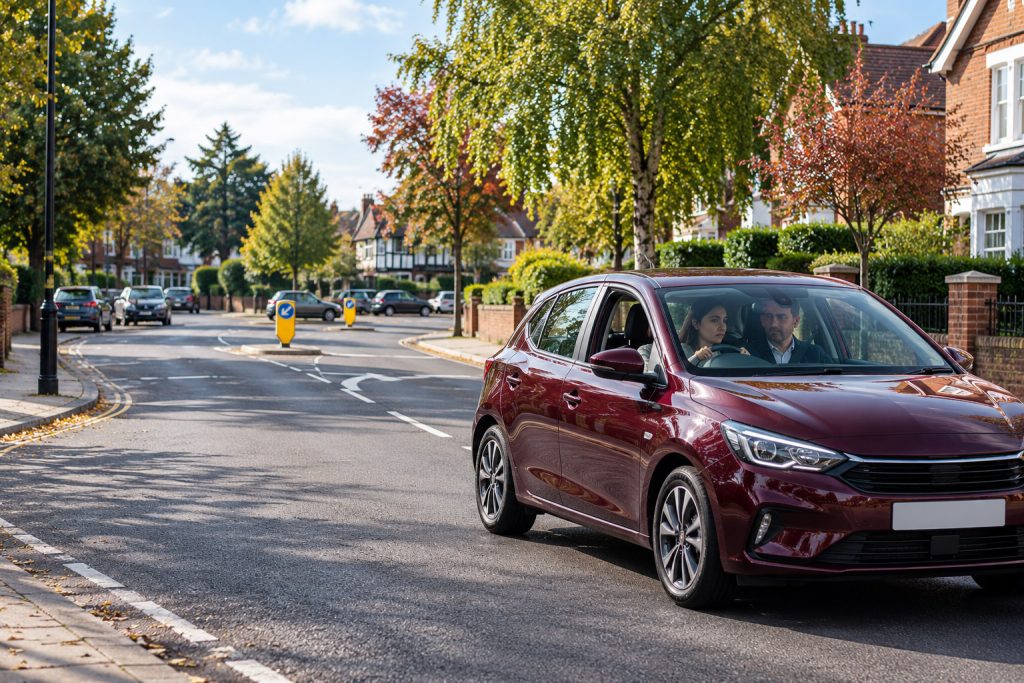
Developing Journey Planning Skills in Sunbury on Thames
Journey planning is an important part of responsible driving. Even a relatively short journey can involve several decisions about direction, road positioning, speed, and potential hazards.
During lessons, you can practise preparing for a journey before moving off.
Understanding Your Route
Before starting a journey, consider the destination, general direction, and types of roads you may encounter. Navigation systems can provide useful directions, but drivers must still pay attention to road signs and changing conditions.
Your instructor can help you understand how to follow directions without becoming distracted by the navigation display.
If a direction is missed, the safest response is to remain calm and continue driving appropriately until you can safely reconsider the route. Making a sudden turn or changing lanes at the last moment can create unnecessary risks.
Recognising Road Signs Early
Road signs provide important information about speed limits, junctions, restrictions, hazards, and directions.
Learning to recognise signs early gives you more time to prepare. For example, advance direction signs can help you identify the correct lane before reaching a junction.
During lessons, practise looking ahead and interpreting signs without losing awareness of nearby traffic.
Managing Unfamiliar Junctions
Not every junction follows the same layout. Some have clear markings and visibility, while others require additional care because of parked vehicles, restricted views, or complex traffic movements.
Learn to approach unfamiliar junctions at an appropriate speed, observe the road layout, and assess traffic before making a decision.
The objective is to understand the principles of safe junction handling rather than memorise one particular location.
Learn to Manage Changing Traffic Conditions
Traffic conditions can change significantly during a journey. A road that is relatively quiet may become busy, while temporary roadworks or parked vehicles can alter the available space.
A learner needs to understand how to adjust their driving without becoming rushed.
Handling Stop-Start Traffic
Congested roads require smooth acceleration, controlled braking, and sufficient space between vehicles.
Avoid following the vehicle ahead too closely. Maintaining an appropriate gap gives you more time to respond if traffic slows suddenly.
In manual cars, you will also need to coordinate clutch control and gear selection smoothly. Automatic drivers should concentrate on controlled acceleration and braking while maintaining awareness of surrounding traffic.
Responding to Temporary Road Changes
Roadworks, temporary traffic signals, diversions, and blocked lanes can make familiar routes feel different.
When approaching these situations:
- Look for temporary signs and instructions.
- Reduce speed when road conditions require it.
- Identify lane closures early.
- Watch for workers and pedestrians.
- Avoid sudden changes in direction.
- Follow the instructions provided by authorised traffic control.
Your instructor can help you understand how to approach temporary changes safely and remain calm when your original route is disrupted.
Sharing Roads with Different Vehicles
You may encounter buses, delivery vehicles, motorcycles, cyclists, and larger commercial vehicles during everyday journeys.
Each road user may need different amounts of space. Large vehicles can have restricted visibility, while cyclists may need to move away from parked cars.
Good driving means recognising these differences and allowing enough room for everyone to use the road safely.
Improve Your Road Positioning and Lane Decisions
Correct road positioning helps you communicate your intentions and maintain a predictable driving style.
Learners sometimes concentrate so heavily on steering that they overlook where the vehicle should be positioned. However, positioning is essential when approaching junctions, following road markings, passing parked vehicles, and changing lanes.
Choosing the Correct Lane
Before approaching a junction or roundabout, look for directional signs and road markings. Identify your intended direction early and move into the appropriate lane when it is safe to do so.
Avoid making a last-minute lane change simply because you have missed a direction. It is safer to continue appropriately and find another suitable route.
Passing Parked Vehicles
Parked vehicles can reduce the available road space, particularly on residential streets.
Before passing them, assess the available width, look for approaching traffic, and consider whether there is sufficient room to proceed safely.
If another vehicle is approaching and there is not enough space for both vehicles, be prepared to wait.
Maintaining Appropriate Following Distance
Following distance is an important part of everyday driving safety.
Leaving sufficient space helps you respond to braking, sudden changes in traffic, and unexpected hazards. The required distance should increase when visibility or road conditions are poor.
Your instructor can help you understand how to judge following distances and maintain a suitable safety margin.
Develop Confidence When Driving Independently
Independent driving requires you to make decisions without waiting for instructions at every stage.
This ability develops through experience and reflection. During lessons, your instructor can gradually give you more responsibility for route choices, following signs, and responding to road situations.
One useful exercise is to explain your decisions after completing a section of a journey.
Consider questions such as:
- Why did you choose that road position?
- What information did you use before changing lanes?
- Did you recognise the junction early enough?
- Could you have adjusted your speed sooner?
- What would you do differently if the same situation happened again?
Discussing these decisions helps you understand your driving habits and identify areas that need further attention.
As your ability develops, you should become more comfortable handling unfamiliar situations while maintaining safe driving standards.
Make Every Driving Lesson More Productive
Your progress depends not only on the number of lessons you complete but also on how effectively you use each session.
Before a lesson, think about the areas where you would like additional practice. This might include navigating unfamiliar roads, maintaining lane discipline, handling traffic queues, or approaching complicated junctions.
During the lesson, listen to your instructor’s feedback and ask questions when something is unclear.
Afterwards, take a few minutes to review what you learned.
A simple lesson review could include:
What went well?
Identify the skills you performed confidently, such as maintaining a suitable speed or recognising road signs.
What needs improvement?
Note situations where you needed additional guidance or made repeated mistakes.
What should you practise next?
Choose one or two areas to concentrate on during your next session.
This approach makes it easier to understand your development and maintain consistent progress.
Testbusters offers different learning options, including weekly, semi-intensive, and intensive driving courses. You can explore the available driving courses and discuss which format suits your schedule and current experience.
Choosing a Driving Instructor in Sunbury on Thames
Your instructor plays an important role in helping you develop practical driving judgement.
When selecting a driving instructor in Sunbury on Thames, consider the quality of instruction, communication, lesson flexibility, and whether the teaching approach supports your individual progress.
Here are some factors worth considering:
- Professional qualifications: Check that your instructor is DVSA-approved.
- Clear explanations: You should understand why a particular driving action is necessary.
- Adaptable lessons: Training should reflect your experience and areas for improvement.
- Constructive feedback: Regular feedback helps you recognise mistakes and correct them.
- Flexible scheduling: Choose lesson times that allow you to practise consistently.
- Practical learning: Lessons should help you develop skills for everyday journeys, not just familiar routes.
Testbusters Driving School has been established since 1976 and provides driving instruction across West London, including Sunbury on Thames.
The school offers manual and automatic driving lessons, along with options for beginners, intensive learners, and drivers seeking additional practice.
You can also learn more about the school’s experience and teaching approach on its About Testbusters Driving School page.
Why Practical Driving Skills Matter After Passing Your Test
Passing the practical driving test is an important achievement, but it is not the end of learning.
Once you begin driving independently, you may encounter unfamiliar destinations, different weather conditions, busy roads, and situations that were not part of your regular lessons.
This is why developing practical judgement during training is so important.
You should understand how to:
- Plan a journey without becoming distracted.
- Follow road signs and navigation instructions.
- Adjust speed according to road conditions.
- Choose safe positions at junctions.
- Maintain appropriate space around other vehicles.
- Respond calmly when a route changes.
- Recognise situations where waiting is safer than proceeding.
These habits can help you become a more responsible driver and manage everyday journeys with greater independence.
Start Your Driving Journey with Testbusters
Learning to drive is a gradual process. Each lesson gives you an opportunity to understand a new situation, improve a particular skill, and become more comfortable making decisions.
If you are searching for a driving instructor in Sunbury on Thames, Testbusters Driving School can help you work towards your driving goals through professional instruction and flexible learning options.
Whether you are a first-time learner or someone looking to improve existing driving skills, focus on developing the judgement and practical abilities that will support you throughout your driving life.
Conclusion
Becoming a confident driver takes practice, patience, and the ability to handle different road situations. Learning to plan journeys, understand road signs, maintain safe positioning, and adapt to changing traffic conditions can help you become a more responsible and independent driver.
Choosing the right driving instructor in Sunbury on Thames can make your learning journey more productive. With professional guidance from Testbusters Driving School, you can develop practical driving skills and prepare for everyday journeys with greater confidence.
Call to Action (CTA)
Ready to Start Your Driving Journey in Sunbury on Thames?
Take the next step towards independent driving with Testbusters Driving School. Get professional guidance, improve your road skills, and build confidence for every journey.
🚗 Book Your Driving Lessons Today!
📞 Call or WhatsApp: 07813 00 00 02
📧 Email: info@testbusters.co.uk
🌐 Website: https://testbusters.co.uk/
Learn today. Drive confidently tomorrow!
Frequently Asked Questions
1. Why is journey planning important when learning to drive?
Journey planning helps drivers understand their route, recognise road signs, anticipate junctions, and prepare for changing traffic conditions. It also reduces the likelihood of making sudden decisions when navigating unfamiliar roads.
2. Can a driving instructor help me practise unfamiliar routes?
Yes. Your instructor can introduce suitable unfamiliar roads and help you understand how to follow directions, interpret signs, choose safe road positions, and respond to different traffic situations.
3. How can I improve my lane discipline?
Look for road signs and markings early, identify your intended direction, and choose the correct lane when it is safe. Regular practice and constructive instructor feedback can help you improve lane discipline.
4. What should I do if I miss a turning while driving?
Remain calm and continue driving safely. Do not make a sudden turn or stop in an unsafe place. Follow the road until you can safely reconsider your route or navigation instructions.
5. Does Testbusters offer manual and automatic driving lessons in Sunbury on Thames?
Testbusters lists both manual and automatic driving lessons among its services. Contact the school on 07813 00 00 02 to discuss availability and lesson arrangements.