
Learning to drive involves much more than steering a car and following road signs. Drivers need to interpret traffic, recognise potential hazards, judge distances, and make safe decisions even when situations change unexpectedly. Working with a professional driving instructor in Hounslow can help learners develop these abilities step by step.
Hounslow offers a varied learning environment, from residential streets and busy junctions to traffic-heavy roads and complex roundabouts. For learners, these different conditions provide opportunities to practise vehicle control, improve observation, and become more comfortable making decisions behind the wheel.
At Testbusters Driving School, lessons are designed to help learners develop practical driving skills and build confidence at a suitable pace. Whether you are starting from scratch, returning after a break, or preparing for your practical test, structured instruction can help you make steady progress towards independent driving.
Why Your Driving Instructor’s Teaching Approach Matters
Every learner has a different starting point. Some people quickly become comfortable with steering and acceleration but need more time to judge gaps in traffic. Others understand road signs but feel uncertain when approaching unfamiliar junctions.
A good lesson should address your current abilities rather than follow the same pattern every time. Your instructor can observe how you respond to road situations, identify areas that need attention, and provide practical exercises to improve them.
For example, if you regularly approach junctions too quickly, your instructor can help you develop a routine for checking mirrors, adjusting speed, observing traffic, and deciding whether it is safe to proceed. Repeating this process in different situations can help you apply the same principles more independently.
Clear explanations and constructive feedback also make it easier to understand mistakes. Instead of simply being told what went wrong, you can learn why a particular decision was unsafe and what to do differently next time.
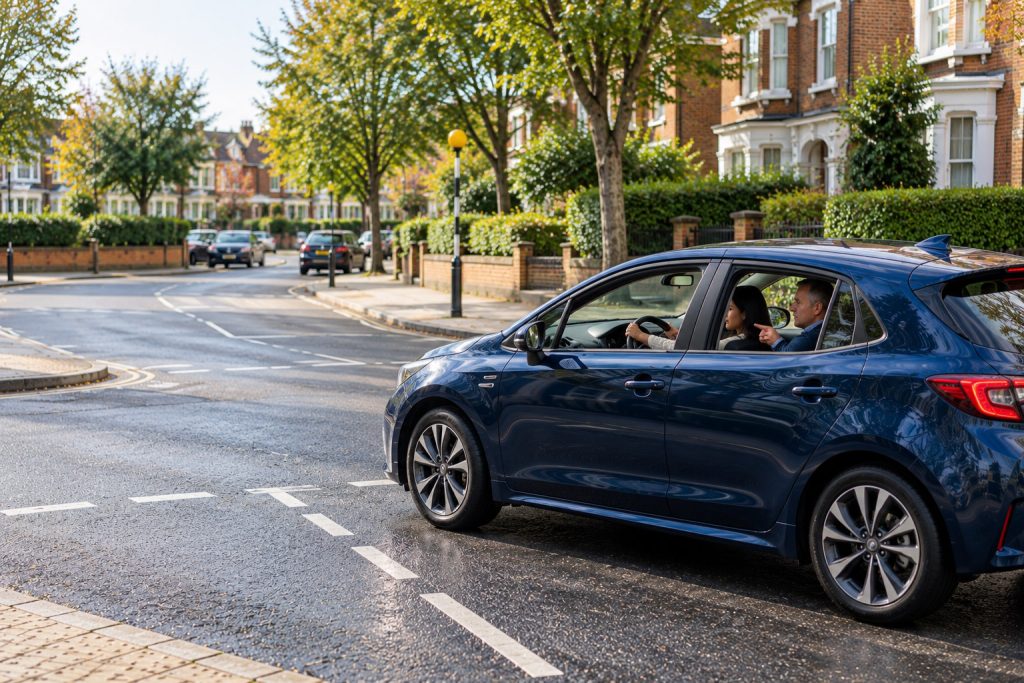
Learn to Read the Road, Not Just Follow Instructions
One important step towards becoming an independent driver is learning to anticipate what may happen next. Safe driving requires you to observe the road ahead, check relevant mirrors, monitor other road users, and adjust your actions before a situation becomes difficult.
During lessons, you can practise identifying clues such as parked vehicles, pedestrians near crossings, cyclists approaching junctions, and vehicles braking further ahead. These observations help you prepare for potential hazards instead of reacting at the last moment.
Your instructor can also help you understand the difference between seeing a hazard and responding to it. Spotting a pedestrian is only the beginning; you must assess their likely movement, consider your speed, and decide whether you need to slow down or stop.
As your skills improve, you should gradually need fewer prompts. The aim is to develop a consistent observation routine that supports safe decisions in familiar and unfamiliar locations.
Build Confidence on Hounslow’s Varied Roads
Practising in different road environments helps learners understand how driving decisions change according to the situation. Hounslow’s mixture of residential roads, busier routes, junctions, and roundabouts can provide useful experience when lessons are planned around your ability.
Residential streets and parked vehicles
Narrower streets can require careful positioning and patience. Parked cars may restrict the available space, while approaching vehicles can make it necessary to judge who should proceed first.
An instructor can help you assess whether there is enough room to continue safely, when to wait, and how to maintain an appropriate distance from parked vehicles. You can also practise checking for pedestrians emerging from between cars.
Junctions and roundabouts
Junctions require several decisions in a short period. You need to choose an appropriate speed, observe traffic, select the correct position, and decide when it is safe to move.
Roundabouts add further challenges because traffic may approach from different directions. Guided practice can help you recognise road markings, identify suitable gaps, signal appropriately, and leave the roundabout safely.
Busy traffic and changing conditions
Traffic conditions can change quickly during a lesson. A road that was clear a moment earlier may become congested, or a vehicle ahead may brake unexpectedly.
Learning to maintain a suitable following distance, manage speed smoothly, and avoid unnecessary pressure from other drivers helps you respond more calmly. Your instructor can introduce more demanding situations as your control and awareness improve.
Develop Better Judgement at Junctions
Junctions are not simply places where you stop and move off. They require observation, planning, and an understanding of priority.
During training, you can develop a repeatable approach: identify the type of junction, check signs and road markings, assess visibility, observe relevant traffic, and choose a safe opportunity to proceed. Your actions should always respond to the actual road conditions rather than relying on a fixed routine alone.
Some junctions have restricted visibility because of parked vehicles, buildings, or the angle of the road. In these situations, your instructor can explain how to approach cautiously and improve your view without putting yourself or other road users at risk.
With practice, you can learn to balance caution with appropriate progress. The objective is not to rush into a gap or wait unnecessarily, but to make a safe, well-informed decision.
Improve Vehicle Control and Positioning
Good vehicle control helps you respond accurately to what you observe. Steering, acceleration, braking, gear selection in a manual car, and positioning all contribute to a smooth and predictable driving style.
Your instructor can help you recognise how small adjustments affect the vehicle. For example, looking well ahead can support smoother steering, while planning your braking earlier can reduce sudden stops. Maintaining a suitable road position also helps other road users understand your intentions.
Manoeuvres such as reversing into a parking space, pulling up safely, and moving away from the kerb require controlled movements and effective observation. Rather than memorising a sequence without understanding it, focus on the reference points, checks, and adjustments that make each manoeuvre safe.
These skills are useful beyond the driving test. They help you manage everyday journeys, park in unfamiliar places, and share the road more predictably.
Find a Lesson Pace That Supports Your Progress
Learning too quickly can leave gaps in your understanding, while repeating familiar tasks without a clear goal may limit progress. A well-structured lesson should give you an opportunity to practise a specific skill, receive feedback, and apply what you have learned.
At the beginning of a lesson, it can help to agree on a realistic objective with your instructor. You might focus on meeting traffic safely, improving roundabout observations, or completing a manoeuvre with fewer prompts.
At the end, review what went well and identify one or two areas to practise next. Keeping brief notes after each lesson can help you recognise recurring mistakes and see how your confidence develops over time.
Testbusters offers flexible weekly, semi-intensive, and intensive driving course options. The most suitable format depends on your availability, current ability, learning preferences, and how much practice you need between sessions. Discuss these factors with the school before choosing a schedule.
What to Look for in a Driving Instructor in Hounslow
When comparing instructors, look beyond convenience alone. Consider whether the teaching approach helps you understand decisions and build skills progressively.
Useful questions include:
- Is the instructor DVSA-approved? Confirm the instructor’s professional status before booking lessons.
- Are explanations clear and constructive? Feedback should help you understand what to improve and how to do it.
- Can lessons adapt to your progress? Your training should reflect your current strengths and development areas.
- Will you practise different road situations? A broad range of conditions can help you prepare for independent driving.
- Can the schedule fit your routine? Consistent practice is easier when lesson times are realistic for you.
- Are goals and progress discussed? Regular reviews can help you understand what you have achieved and what comes next.
The right instructor should support your learning while encouraging you to take increasing responsibility for your decisions. The purpose of instruction is to prepare you to drive safely without depending on someone else to tell you what to do.
How Testbusters Driving School Can Help
Testbusters Driving School has been established since 1976 and provides driving instruction across West London. The school highlights its DVSA-approved instructors, patient approach, and flexible learning options.
If you are looking for a driving instructor in Hounslow, you can discuss your experience level, preferred lesson type, availability, and learning goals with the team. Whether you are a beginner or need to rebuild confidence after time away from driving, your lessons can focus on the skills you need to develop.
You can also explore the school’s information about driving lessons in Hounslow to learn more about its local training options.
To enquire about lessons, call or WhatsApp 07813 00 00 02, or email info@testbusters.co.uk.
Conclusion
Choosing a suitable driving instructor in Hounslow can help you turn individual driving techniques into practical, repeatable habits. With structured lessons, constructive feedback, and experience on different types of roads, you can improve your observation, vehicle control, hazard awareness, and decision-making.
The aim is not simply to complete lessons or prepare for one test. It is to become a driver who can recognise risks, respond appropriately, and make responsible decisions on everyday journeys.
If you are ready to begin or continue your driving journey, contact Testbusters Driving School to discuss your requirements and take the next step towards safer, more independent driving.
Ready to Learn with a Driving Instructor in Hounslow?
Build your road awareness, improve your driving skills, and gain confidence with professional guidance from Testbusters Driving School.
🚗 Book your driving lessons in Hounslow today!
📞 Call or WhatsApp: 07813 00 00 02
📧 Email: info@testbusters.co.uk
🌐 Website: https://testbusters.co.uk/
Frequently Asked Questions
1. How do I choose a driving instructor in Hounslow?
Look for a DVSA-approved instructor who explains things clearly, adapts lessons to your progress, and helps you practise a range of real-world driving situations. Discuss your goals and schedule before booking.
2. Can a driving instructor help complete beginners?
Yes. Beginners can start with basic vehicle controls and gradually progress to moving off, stopping, junctions, manoeuvres, and more complex traffic situations as their ability develops.
3. How often should I take driving lessons?
The right frequency depends on your schedule, budget, current skills, and opportunities for practice. Regular lessons can help maintain continuity, but your instructor can recommend a suitable plan based on your progress.
4. Can I take intensive driving lessons in Hounslow?
Testbusters offers weekly, semi-intensive, and intensive course options. Contact the school to discuss availability and whether an intensive schedule is suitable for your current driving ability.
5. What should I focus on before my practical driving test?
Work on independent observation, safe judgement at junctions, appropriate speed and positioning, hazard awareness, manoeuvres, and responding calmly to changing conditions. Your instructor can help identify any remaining areas that need practice.