
Learning to drive involves much more than steering a car, following signs and remembering traffic rules. Effective driving lessons Richmond should help you understand what is happening around your vehicle, anticipate potential hazards and choose safe responses before situations become difficult.
Every journey presents a different combination of road users, traffic movements, visibility and road layouts. Developing the ability to interpret these conditions is an important part of becoming a capable driver.
Whether you are learning for the first time or improving existing skills, professional instruction can help you build the awareness and judgement needed for everyday driving in Richmond and the surrounding areas.
Why Road Awareness Matters During Driving Lessons in Richmond
Road awareness is the ability to notice relevant information, understand its significance and respond appropriately.
A driver might see a pedestrian near a crossing, but a more observant driver also considers whether that pedestrian may step into the road. Similarly, seeing a vehicle approaching a junction is only the beginning; understanding its likely movement helps you decide whether it is safe to proceed.
During driving lessons, you can develop this ability by learning to:
- Scan the road ahead rather than concentrating only on the vehicle in front.
- Check mirrors before changing speed or direction.
- Recognise potential hazards early.
- Adjust speed to suit visibility and traffic conditions.
- Maintain appropriate space around other vehicles.
- Make decisions without relying on constant instructor prompts.
The objective is to become an observant driver who can respond calmly and appropriately to changing situations.
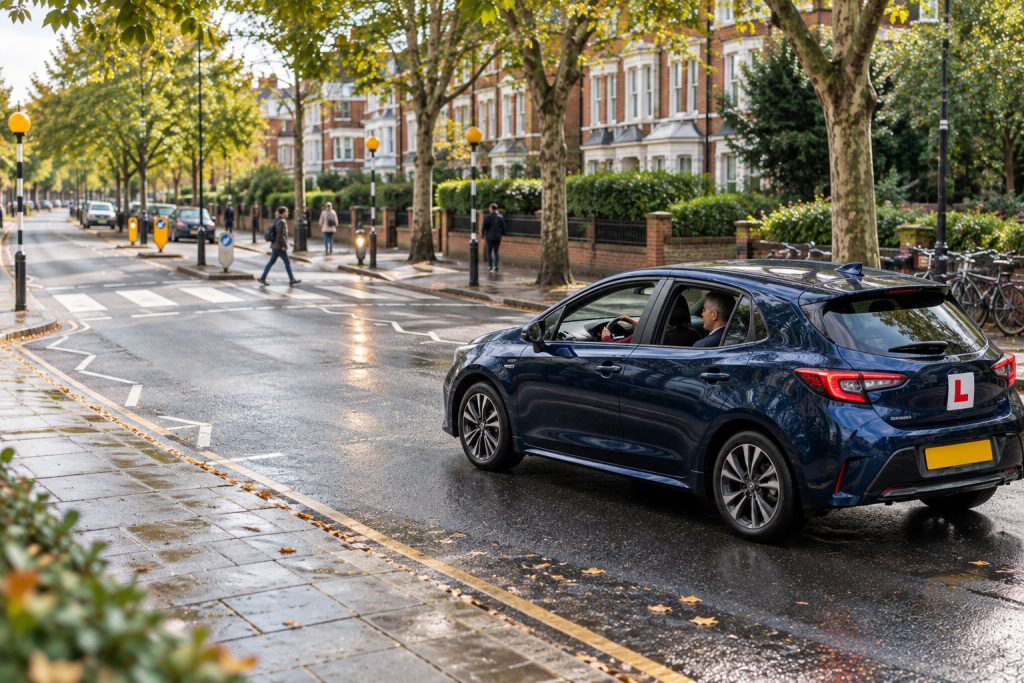
Understanding Richmond’s Different Driving Environments
Richmond offers a varied setting for practical driving experience. Residential streets, busier shopping areas, junctions and roads shared by pedestrians and cyclists can require different approaches.
Learning to adapt your driving to these changing environments is more useful than becoming comfortable with only one familiar route.
Driving Through Residential Streets
Residential roads often require careful observation because parked cars can restrict visibility and narrow the available driving space.
During lessons, you can practise judging whether there is enough room to pass parked vehicles safely, recognising possible hazards between cars and responding to oncoming traffic.
You should also learn to anticipate children, pedestrians, cyclists and vehicles emerging from driveways.
Good positioning and appropriate speed are particularly important when visibility is limited.
Managing Busier Roads
Busier roads can present several decisions at once. You may need to observe traffic signals, monitor vehicles in neighbouring lanes, identify the correct road position and prepare for changing traffic flow.
Your instructor can help you break these situations into manageable steps.
Rather than reacting at the last moment, you learn to look further ahead, identify possible options and make decisions early enough to maintain safe control.
Approaching Junctions and Roundabouts
Junctions
You need to understand road signs and markings, select an appropriate speed, assess other vehicles and identify a safe opportunity to proceed.
During driving lessons in Richmond, practise explaining what you can see and what you intend to do. This encourages you to think through your decisions instead of following instructions mechanically.
Learn to Recognise Hazards Before They Develop
Hazard recognition is an essential driving skill because many road situations become more difficult when drivers notice them too late.
A hazard may be a stationary object, a moving vehicle or a developing situation that requires your attention.
Examples include a cyclist approaching a junction, a vehicle braking unexpectedly, a pedestrian standing near the kerb or traffic beginning to slow ahead.
A useful observation routine involves three stages.
- Notice: Identify the object, road user or changing condition.
- Assess: Consider how it could affect your journey and whether its movement is predictable.
- Respond: Adjust your speed, position or following distance when necessary.
For example, if you see brake lights several vehicles ahead, easing off the accelerator early may give you more time to respond smoothly.
The purpose is not to anticipate every possible event perfectly. It is to recognise relevant warning signs and maintain enough time and space to make safe decisions.
Develop Better Mirror and Blind-Spot Awareness
Mirrors help you understand what is happening behind and beside your vehicle. However, looking at a mirror is only useful when the information influences your next decision.
Your instructor can help you develop a consistent observation routine for moving off, changing direction, changing lanes and responding to surrounding traffic.
You should learn to use mirrors when appropriate and check blind spots when the manoeuvre requires it.
Avoid treating observations as a fixed sequence performed without thought. The timing and extent of your checks should reflect the situation.
With practice, these habits become more natural and help you make better-informed decisions.
Make Progress With Manual or Automatic Driving Lessons
The choice between manual and automatic tuition depends on your preferences, goals and comfort with vehicle controls.
Manual Driving Lessons
Manual lessons help you develop coordination between the clutch, accelerator, brakes and gears.
You will need to learn how to select appropriate gears, control the vehicle smoothly and manage the clutch while keeping your attention on the surrounding road environment.
As your vehicle control improves, you can devote more attention to observation and planning.
Automatic Driving Lessons
Automatic lessons remove the need to operate a clutch or change gears manually.
This can allow learners to focus more attention on steering, positioning, speed management and traffic awareness while still developing the essential skills required for safe driving.
Testbusters offers manual and automatic driving tuition. Discuss your needs with the school before choosing the most suitable option.
Practise Safe Space Management
Keeping appropriate space around your vehicle gives you more time to respond to hazards.
Following another car too closely reduces your opportunity to react if the driver brakes suddenly. Leaving suitable space also helps you see further along the road and anticipate developing situations.
During your lessons, learn to adjust your following distance to suit speed, weather, visibility and road conditions.
Space management also matters when passing parked vehicles, meeting oncoming traffic and approaching cyclists.
Your instructor can explain how to judge available space and when waiting is safer than attempting to pass.
Understand How Weather and Visibility Affect Driving
Driving conditions can change even on a familiar route.
Rain may reduce grip and increase stopping distances. Low sunlight can affect visibility, while darkness can make pedestrians and cyclists harder to identify. Wet leaves or standing water may also affect vehicle control.
Practical instruction should help you understand how these conditions influence your decisions.
You may need to reduce speed, increase following distance, use lights appropriately and avoid sudden braking or steering.
The key principle is to adapt your driving to the conditions rather than assuming that a familiar road will always be equally easy to navigate.
Turn Instructor Feedback Into Better Decisions
Feedback is most useful when it helps you understand why a particular action was appropriate or what could be improved.
After a challenging situation, ask your instructor what you noticed correctly, what you missed and how you could respond differently next time.
For example, if you hesitated at a roundabout, the underlying issue might involve observation, judging traffic speed or selecting a suitable gap.
Identifying the cause gives you a clearer goal for the next lesson.
Testbusters provides professional driving instruction tailored to learners’ needs. You can discuss your current experience and areas for improvement when arranging your tuition.
Choose a Lesson Schedule That Supports Consistent Learning
Driving skills develop through instruction, practice and reflection. The right lesson schedule depends on your availability, previous experience and how quickly you are progressing.
Regular weekly lessons can help you build skills gradually and identify areas requiring additional attention. More concentrated training may suit learners who can commit more time to driving over a shorter period.
Testbusters offers weekly, semi-intensive and intensive course options. Confirm current availability and suitability directly with the school.
Whichever schedule you choose, focus on understanding each skill rather than rushing through lessons.
Keep Developing After Passing Your Test
Passing your driving test demonstrates that you have met the required standard, but experience continues to develop afterwards.
Newly qualified drivers may encounter unfamiliar journeys, complicated parking situations, longer routes and weather conditions they have not experienced frequently during training.
Continue applying the observation and planning habits developed during your lessons.
If you want additional support after passing, ask about refresher driving lessons, motorway tuition or the Pass Plus course. These options may help you build experience in areas where you would benefit from further guidance.
Start Building Better Driving Habits With Testbusters
Good driving comes from combining vehicle control with observation, anticipation and sound judgement.
With suitable professional instruction, you can learn to interpret road conditions, recognise developing hazards and respond more effectively to everyday traffic situations.
Testbusters Driving School serves Richmond and surrounding West London areas. Contact the school to discuss your experience, preferred transmission and lesson requirements.
Conclusion
Choosing driving lessons Richmond is an opportunity to develop more than the skills required for a practical test. It is a chance to learn how to interpret road conditions, manage space, recognise hazards and make informed decisions.
By focusing on awareness as well as vehicle control, you can build habits that support safer driving in a wide range of situations.
Start with clear learning goals, make use of your instructor’s feedback and continue improving with practice. These habits can help you become a more observant and responsible driver on Richmond’s roads and beyond.
Call to Action
Ready to develop your road awareness and practical driving skills?
Contact Testbusters Driving School to discuss driving lessons in Richmond and find a training approach suited to your goals.
Frequently Asked Questions
1. What can I learn during driving lessons in Richmond?
Lessons can cover vehicle control, road positioning, junctions, roundabouts, observation, hazard awareness, parking and preparation for independent driving.
2. Are manual and automatic driving lessons available in Richmond?
Testbusters offers both manual and automatic tuition. Contact the school to discuss which option best suits your experience and driving goals.
3. Can driving lessons help me improve hazard awareness?
Yes. Professional instruction can help you recognise developing hazards, assess traffic situations and respond appropriately to changing road conditions.
4. Can I choose an intensive driving course in Richmond?
Testbusters offers intensive as well as weekly and semi-intensive course options. Ask the school about current availability and the course best suited to your needs.
5. Can I take driving lessons after passing my test?
Yes. Refresher lessons, motorway tuition and Pass Plus training can provide opportunities to develop additional skills and experience after qualifying.