
Learning to drive is not simply about completing a certain number of lessons or reaching test day. The real value of car driving lessons Hounslow comes from what you learn during each session and how effectively you turn that learning into practical driving ability.
A productive lesson should give you more than time behind the wheel. It should help you understand your decisions, recognise developing situations, correct recurring mistakes and become increasingly comfortable handling the car without constant instruction.
Whether you are starting from scratch, returning to driving or preparing for your practical test, making every lesson count can help you develop useful skills that continue beyond the driving test.
What Makes a Driving Lesson Productive?
Not every minute spent in a car automatically becomes useful learning.
A productive lesson has a clear purpose. You might spend one session improving junction decisions, another working on parking, and another developing independent driving skills in more demanding traffic.
The important point is progression.
Instead of simply driving around familiar roads, your instructor can gradually introduce situations that require you to observe, plan and respond independently. This creates opportunities to turn individual driving techniques into genuine road awareness.
A good lesson should leave you knowing:
- What you improved
- What still needs work
- Which mistakes you need to avoid
- What you should practise next
- How today’s skills apply to everyday driving
This approach makes your training more structured without making every lesson feel rigid.
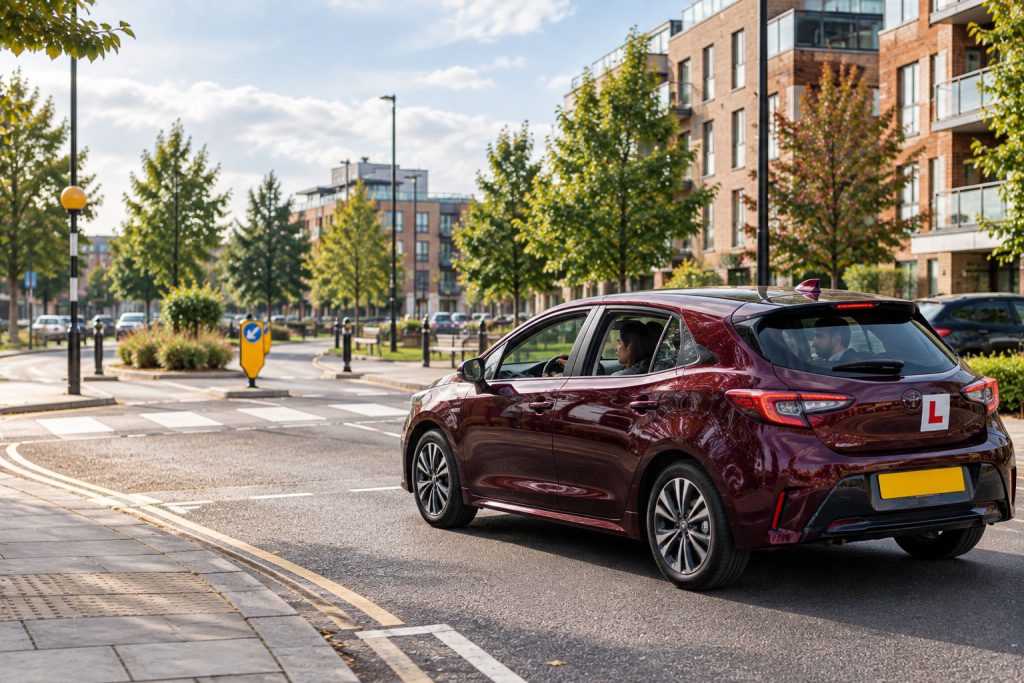
Start Each Lesson With a Clear Objective
One simple way to improve your driving progress is to know what you are working on before the car moves.
For example, if you have previously struggled with roundabouts, your next lesson might focus on:
- Choosing the correct lane
- Reading road signs and markings
- Checking mirrors at the right time
- Selecting an appropriate speed
- Identifying safe gaps
- Moving into the correct exit lane
Once the objective is clear, you can concentrate on improving that particular area rather than trying to think about every possible driving skill simultaneously.
This also gives your instructor a better opportunity to measure your progress.
Learn From Mistakes Instead of Simply Correcting Them
Making mistakes is a normal part of learning to drive.
What matters is understanding why the mistake happened.
For example, if you approach a junction too quickly, the solution is not simply to hear “slow down” and continue driving. You need to understand whether you failed to read the road early enough, noticed the junction too late, or were concentrating on another part of the driving environment.
Understanding the cause makes it easier to avoid repeating the same mistake.
During car driving lessons Hounslow, ask questions when something is unclear. Understanding the reasoning behind a driving decision can be more valuable than memorising an instruction.
Build Observation Into Every Situation
Good driving is largely about what you notice before you need to react.
Observation should become part of your normal driving routine rather than something you remember only during a practical test.
Your training can help you become more aware of:
- Pedestrians approaching crossings
- Cyclists and motorcyclists
- Parked vehicles
- Changing traffic signals
- Vehicles emerging from side roads
- Road signs and markings
- Speed-limit changes
- Vehicles signalling unexpectedly
- Potential hazards further ahead
The earlier you recognise a developing situation, the more time you have to make an appropriate decision.
This is one reason practical driving experience matters. You are learning to read the road as an environment rather than concentrating only on the vehicle directly in front of you.
Use Hounslow’s Variety to Develop Adaptability
Driving in one quiet residential area repeatedly may help you become comfortable with basic vehicle control, but real driving requires adaptability.
Hounslow provides opportunities to encounter different types of road environments, traffic levels and junction arrangements.
A useful training programme can gradually expose learners to different situations so that they become comfortable changing their approach when circumstances change.
For example, a learner may need to move from a quiet street to a busier road where there is more traffic, more parked vehicles and more information to process.
The objective is not simply to become familiar with one route. It is to develop the ability to apply your skills when the environment changes.
Make Vehicle Control Feel Natural
When vehicle controls require too much conscious attention, it becomes harder to focus on the road.
For manual learners, this can include developing smoother clutch control, gear changes and acceleration. Automatic learners may have fewer vehicle-control tasks to coordinate, but still need to develop smooth steering, braking, acceleration and positioning.
The aim is eventually to make basic controls feel natural.
Once you are comfortable operating the car, you can dedicate more attention to observation, anticipation and decision-making.
Testbusters currently provides both manual and automatic vehicles, with lessons conducted in clean, maintained vehicles equipped with dual controls.
Don’t Ignore Parking and Low-Speed Skills
Parking can sometimes receive less attention than driving on larger roads, but low-speed control is an important part of everyday motoring.
Your lessons can provide opportunities to practise:
- Reversing into parking spaces
- Parallel parking
- Pulling up accurately
- Reversing manoeuvres
- Positioning near the kerb
- Controlling the car at low speed
- Checking surroundings before moving
The goal should not simply be completing a manoeuvre because an instructor told you what to do.
You should gradually understand how to judge space, position the vehicle and make corrections independently.
Choose the Transmission That Fits Your Needs
The choice between manual and automatic driving lessons depends on your circumstances and preferences.
Manual driving requires coordination between the clutch, gears, accelerator, brakes and steering. Learning these controls can give you experience with a wider range of vehicle types.
Automatic driving removes manual gear changes and clutch operation, allowing learners to concentrate more heavily on steering, observation, positioning and traffic decisions.
Neither option removes the need for proper road training.
If you are unsure which transmission suits you, discuss your requirements before booking. Testbusters offers both manual and automatic tuition as part of its driving-school services.
Ask for Feedback You Can Use
Feedback becomes more valuable when it gives you something specific to work on.
Instead of only asking, “How did I do?”, try questions such as:
- What is my biggest area for improvement?
- Which mistake am I repeating?
- What should I focus on before my next lesson?
- Am I becoming more independent?
- Which situations should I practise more?
- What am I doing well that I should continue?
This creates a useful conversation between you and your instructor.
Over time, you should be able to recognise some of your own mistakes before your instructor points them out. That is an important sign that your driving awareness is developing.
Weekly or Intensive Lessons?
Different learners benefit from different schedules.
Weekly lessons can provide a steady routine and allow you to practise between sessions. They can work particularly well for people balancing driving tuition with work, education or other commitments.
More concentrated training may suit learners who have greater availability or want to maintain momentum.
Testbusters currently offers weekly, semi-intensive and intensive driving courses, giving learners different ways to structure their tuition.
Whichever schedule you choose, consistency matters. A concentrated course should still provide enough time to develop skills rather than simply rushing through topics.
Don’t Measure Progress Only by Test Readiness
Passing the practical test is an important milestone, but it should not be the only measurement of progress.
Ask yourself whether you are becoming better at:
- Anticipating hazards
- Choosing safe speeds
- Reading road layouts
- Making independent decisions
- Managing unfamiliar situations
- Staying calm when traffic becomes complicated
- Correcting mistakes safely
- Driving without constant prompts
These abilities matter after you receive your licence.
A learner who understands why they are making a particular decision is developing something more valuable than simply memorising a test route.
Keep a Simple Record of Your Progress
You can make your training more effective by keeping track of the areas you have covered.
After each lesson, make a short note of:
What went well:
Identify one or two skills that improved.
What needs attention:
Write down a recurring difficulty.
What to practise next:
Choose one clear area for your next session.
What you learned:
Record an important observation or driving principle.
This takes only a few minutes but can help you see progress over time.
Why Professional Guidance Still Matters
Learning from experience is important, but professional instruction can help you identify mistakes before they become established habits.
Testbusters states that its instructors are DVSA-approved and that its teaching approach is adapted to individual learner needs. The school also offers multilingual tuition in English, Punjabi, Hindi and Urdu, with female instructors available upon request.
The right instructor can therefore do more than control the lesson. They can help you understand your current ability, identify areas requiring attention and introduce new challenges at an appropriate stage.
Preparing for Life After the Driving Test
The final stage of your training should gradually move towards independence.
You should become increasingly capable of deciding:
- When to slow down
- Where to position the car
- When to change lanes
- How to approach unfamiliar junctions
- How to respond to developing hazards
- When it is safer to wait rather than proceed
These decisions become part of everyday driving once you are licensed.
Additional training can also be useful after passing. Testbusters offers courses including motorway driving lessons, refresher driving lessons and Pass Plus.
Conclusion
Effective car driving lessons Hounslow should be about more than accumulating hours behind the wheel. Every lesson is an opportunity to improve a specific skill, understand your mistakes, strengthen observation and become more independent.
The most useful progress happens when you actively participate in the learning process. Ask questions, listen to feedback, recognise recurring mistakes and practise applying your skills in different situations.
With structured professional guidance and consistent practice, each lesson can move you closer to becoming a capable driver who is prepared not only for the practical test but also for everyday life on UK roads.
Call to Action
Ready to make your driving lessons more productive?
Contact Testbusters Driving School to discuss your requirements and find a lesson approach suited to your experience, schedule and driving goals.
Frequently Asked Questions
1. What do car driving lessons in Hounslow cover?
Lessons can cover vehicle control, observation, road positioning, junctions, roundabouts, parking, manoeuvres, independent driving, hazard awareness and practical-test preparation.
2. Can I choose manual or automatic car driving lessons in Hounslow?
Yes. Testbusters currently offers both manual and automatic driving lessons, allowing learners to choose the transmission that suits their needs.
3. Are car driving lessons suitable for nervous learners?
Yes. Professional instruction can be adapted to a learner’s experience and confidence level. Testbusters states that its instructors support nervous students with patient and adaptable teaching.
4. Can I take intensive car driving lessons in Hounslow?
Yes. Testbusters currently offers weekly, semi-intensive and intensive driving-course options. The appropriate format depends on your availability, experience and learning requirements.
5. Can I continue driving training after passing my test?
Yes. Additional training can help newly qualified drivers develop further experience. Testbusters offers options including motorway driving lessons, refresher lessons and Pass Plus.