
Finding the right driving instructor Whitton learners can trust is an important part of learning to drive. Your instructor is not simply there to control the lesson; they help you understand how to read the road, recognise risks, correct mistakes and gradually make decisions without assistance.
For a new learner, the relationship between instructor and student can have a significant impact on how comfortable and productive each lesson feels. Clear explanations, constructive feedback and a teaching approach suited to your pace can make the learning process easier to manage.
Whether you are starting from your first lesson, changing instructors or preparing for your practical test, understanding what to look for can help you make a more informed choice.
What Does a Driving Instructor Actually Do?
A professional instructor provides much more than basic directions while you drive.
They observe how you control the vehicle, how you respond to traffic and how effectively you anticipate potential hazards. They can then use that information to decide what you should practise next.
For example, one learner may need more work on clutch control, while another may already control the vehicle comfortably but struggle with observation at busy junctions.
This individual approach is important because learning to drive is not a fixed process. Different learners develop different skills at different speeds.
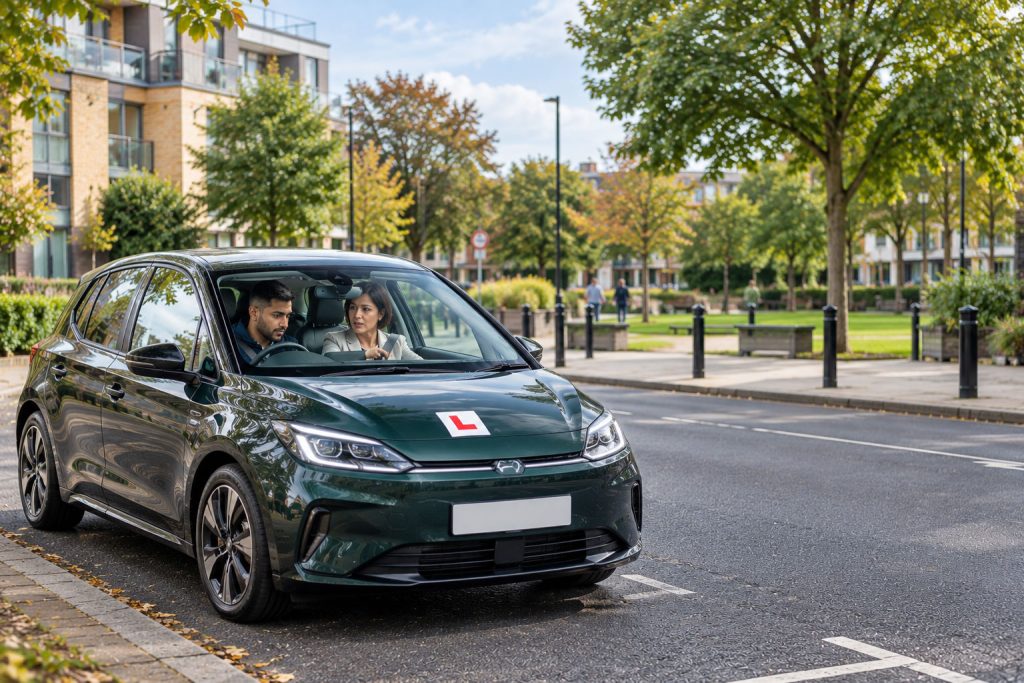
Why the Instructor-Learner Relationship Matters
Driving lessons involve constant communication.
You need to feel comfortable asking questions when something is unclear. At the same time, your instructor needs to be able to give honest feedback about areas that require improvement.
A positive learning relationship does not mean avoiding mistakes or criticism. Instead, it means understanding what went wrong and knowing what you can do differently next time.
For nervous learners in particular, a calm and patient teaching style can make challenging situations easier to approach progressively.
Testbusters says its instructors are DVSA-approved, patient and friendly, with teaching adapted to individual learner requirements. The school also states that it supports nervous students.
The Importance of a Personalised Learning Plan
Two learners can take the same number of lessons and have completely different strengths.
One may be comfortable with roundabouts but struggle with manoeuvres. Another may have excellent vehicle control but need more practice with independent decision-making.
A useful lesson plan should reflect those differences.
Testbusters states that it considers a learner’s existing knowledge and individual needs when creating a customised driving course.
This type of approach allows lesson time to be spent on the skills that actually need development rather than following an identical programme for every learner.
What Should You Discuss Before Booking?
Before committing to lessons, it is worth discussing a few practical points with the driving school.
Manual or Automatic
Decide whether you want to learn in a manual or automatic vehicle.
Manual cars require learners to coordinate clutch, gears, acceleration and steering. Automatic cars remove manual gear changes, allowing learners to focus more heavily on road awareness and decision-making.
Testbusters provides both manual and automatic tuition.
Lesson Availability
Your lessons need to fit realistically around your routine.
Ask about available days, lesson duration and whether the instructor can provide a consistent schedule. Regularity can be useful because long gaps between lessons may interrupt your progress.
Your Current Experience
Tell the instructor whether you are a complete beginner, have had previous lessons or are returning to driving after a long break.
This gives them a better starting point for assessing what you already know.
For learners looking specifically for beginner driving lessons Whitton, explaining your experience honestly can help the instructor plan the first session appropriately.
How Good Feedback Helps You Improve
Feedback is one of the most valuable parts of professional driving tuition.
Simply being told that something was incorrect does not necessarily help you improve. You need to understand what happened, why it happened and what action would produce a safer result.
For example, if your approach to a junction is too fast, the useful lesson is not simply “slow down.” You should understand what you should observe earlier and how your speed should change as you approach.
Over time, this type of explanation helps you develop judgement rather than memorising isolated instructions.
Learning to Recognise Your Own Mistakes
An important stage in driver development is becoming able to identify your own mistakes.
At the beginning, your instructor may point out hazards and explain what you should do.
Later, you should start recognising situations before the instructor needs to intervene.
This is a major step towards independent driving.
During your driving lessons Twickenham, for example, the same principles of observation, positioning and anticipation can be applied to different traffic environments. The objective is to develop transferable skills rather than simply memorising individual routes.
Why Consistency Can Make a Difference
Changing instructors frequently can make learning less straightforward because each instructor may explain techniques differently.
When possible, having a consistent instructor allows them to understand your progress over time.
They can remember the areas you have already worked on, identify recurring mistakes and introduce new challenges when you are ready.
Consistency also allows you to become familiar with your instructor’s communication style, which can make lessons more efficient.
However, if your current teaching arrangement is not working for you, changing instructor can still be a reasonable option. The most important factor is finding a learning environment where you can make genuine progress.
Building Confidence Without Rushing
Confidence should develop from understanding and repeated practice.
Trying to rush through difficult situations simply because you want to progress quickly can sometimes create unnecessary pressure.
Instead, your instructor can introduce increasingly demanding environments as your skills improve.
You might begin with quieter roads before progressing towards busier junctions, roundabouts, multi-lane roads and more complex traffic conditions.
Learners who have already completed some training but feel uncertain can also consider refresher driving lessons to rebuild familiarity and confidence.
Learning Around Different Road Conditions
A useful instructor should help you experience more than one type of road.
Residential streets teach different skills from busy urban routes. Large roundabouts create different demands from narrow roads with parked vehicles.
You may eventually need to deal with cyclists, pedestrians, buses, delivery vehicles, changing speed limits and unexpected hazards.
This variety is important because passing a driving test does not mean every future road will look familiar.
For learners who want to expand their experience after passing, motorway driving lessons can provide additional training in a very different road environment.
Choosing the Right Lesson Format
Not everyone needs the same type of schedule.
Weekly lessons can work well for learners who need to balance driving tuition with school, university, work or family responsibilities.
Some learners may prefer a more concentrated approach. Testbusters offers weekly, semi-intensive and intensive training options.
An intensive driving course Whitton can be considered when a learner has sufficient availability and wants a concentrated training schedule.
The key is choosing a format that gives you enough opportunity to practise and consolidate the skills being taught.
Supporting Different Learner Needs
Learners can have different communication and accessibility requirements.
Some may prefer a particular teaching style, while others may feel more comfortable learning in a particular language.
Testbusters states that lessons are available in English, Punjabi, Hindi and Urdu, and that female instructors can be requested.
For someone searching for a female driving instructor Whitton, asking about instructor availability before booking can help ensure that the lesson arrangement meets their preferences.
What About Test Preparation?
Your instructor should prepare you for the practical driving test, but effective training should extend beyond test-day routines.
You need to understand why you are making particular decisions rather than simply memorising a test route.
As you approach test standard, lessons can include independent driving, manoeuvres, junctions, hazard awareness and realistic test-style situations.
A useful instructor can also help identify whether a particular weakness needs more practice before you book your test.
Continuing Your Development After Passing
Getting your licence is an important milestone, but your driving experience continues to develop afterwards.
New drivers may eventually encounter motorway journeys, unfamiliar cities, night driving, longer trips and different weather conditions.
Additional training can help expand your experience.
Testbusters offers a Pass Plus course with a minimum duration of six hours, covering areas including different road conditions, dual carriageways and motorways.
If you are considering Pass Plus course training, speak with an appropriately qualified instructor about whether it fits your post-test development goals.
Questions to Ask a Driving Instructor in Whitton
Before booking, consider asking:
- Are you DVSA-approved?
- Do you provide manual and automatic lessons?
- Can lessons be tailored to my current ability?
- What lesson lengths are available?
- Can I request a particular instructor?
- Do you support nervous learners?
- Are intensive or semi-intensive options available?
- How will my progress be assessed?
- Do you provide additional training after passing?
These questions can help you understand whether the instructor’s approach matches your requirements.
Why Local Coverage Can Be Useful
A local instructor can make practical arrangements easier, particularly if you want lessons close to home, college, work or another regular location.
Testbusters lists Whitton among its West London service areas, alongside nearby locations including Twickenham, Richmond, Teddington and Isleworth.
This local coverage can make it easier to build driving experience across different West London environments.
Learners may also find related local tuition useful when comparing driving lessons Isleworth or other nearby areas according to their regular travel requirements.
Conclusion
Choosing a driving instructor Whitton is about finding the right combination of professional knowledge, communication, patience and structured training.
A good instructor should help you understand your mistakes, recognise hazards earlier, make independent decisions and gradually become comfortable with increasingly complex road situations.
The goal is not simply to complete a set number of lessons. It is to develop skills that remain useful after your test, when you are responsible for every driving decision yourself.
Testbusters provides DVSA-approved driving instruction across West London, including Whitton, with manual and automatic options, flexible course formats and training for learners at different stages.
Ready to Find Your Driving Instructor in Whitton?
Start your driving journey with Testbusters and find a lesson approach tailored to your experience, confidence and goals. Contact the team today to discuss your requirements and arrange your driving lessons in Whitton.