
Starting to learn to drive can feel exciting, unfamiliar and sometimes challenging. For anyone searching for driving classes for beginners Isleworth, choosing structured professional tuition can provide a clear starting point and help turn those first few lessons into useful, practical experience.
Learning to drive is about much more than controlling a car. You need to understand how to observe the road, anticipate hazards, respond to other road users and make sensible decisions independently.
For a beginner, these skills develop gradually. The right lessons should therefore give you time to understand the fundamentals before introducing increasingly demanding road situations.
What Should Beginners Expect from Driving Classes?
Your first driving class is unlikely to involve complicated traffic situations straight away. Instead, your instructor will normally introduce you to the vehicle, explain the controls and establish how comfortable you are behind the wheel.
The early stage is about creating a solid foundation. Once you understand the basic controls and can operate the vehicle safely, your lessons can progress towards practical road situations.
A professional instructor can also adjust the pace according to your confidence and existing experience. Someone who has never sat behind the wheel will naturally need a different approach from someone who has already had private practice.
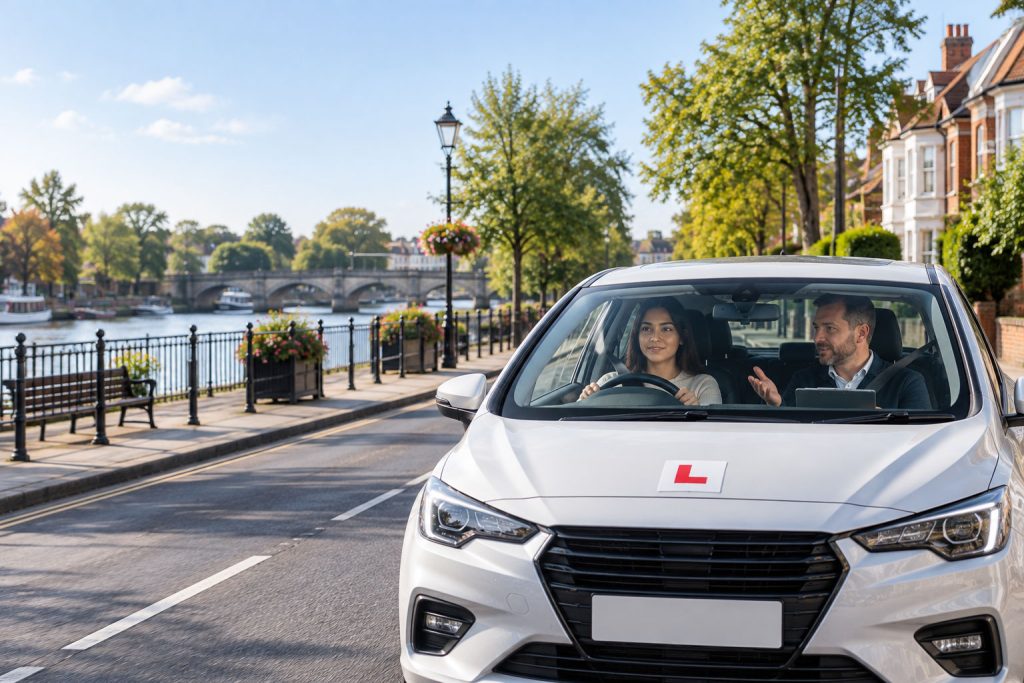
Starting with the Basics
The first few classes should concentrate on fundamental driving skills.
Getting Comfortable in the Car
Before moving onto the road, you need to understand the driver’s controls and establish a comfortable driving position.
This includes adjusting your seat and mirrors, understanding the steering wheel, becoming familiar with the pedals and learning the correct cockpit routine.
For manual learners, clutch and gear control will also form part of the early training. Automatic learners can concentrate more immediately on steering, braking, observation and road positioning.
Moving Off and Stopping
Moving away safely and bringing the car to a controlled stop are fundamental skills.
Beginners need to understand how to check their surroundings before moving, control the vehicle smoothly and respond appropriately when stopping.
These simple actions become the foundation for more advanced driving situations later.
Developing Observation Skills
One of the biggest changes during beginner driving classes is learning to look beyond the immediate area directly in front of the vehicle.
You need to develop an awareness of what is happening around you and what could happen next.
This includes checking mirrors regularly, looking for pedestrians and cyclists, identifying parked vehicles and noticing signs, road markings and changes in traffic flow.
Good observation allows you to plan rather than simply react.
Learning to Read the Road
Driving involves constant decision-making.
A junction may require you to determine whether you can proceed safely. A parked vehicle may require you to adjust your road position. A pedestrian approaching a crossing may mean you need to reduce speed and prepare to stop.
During your beginner driving lessons, your instructor can help you understand how to recognise these situations and choose an appropriate response.
The aim is eventually to make these decisions without waiting for an instructor to tell you what to do.
Building Confidence Around Isleworth
As your basic skills improve, your instructor can gradually introduce a wider variety of roads.
This might include residential streets, busier routes, junctions, traffic lights, roundabouts, pedestrian crossings and roads with parked vehicles.
Learning in different environments is useful because everyday driving rarely follows one predictable pattern.
The objective is not simply to memorise a route. Instead, you should develop the ability to apply the same safe-driving principles whenever the road environment changes.
Manual or Automatic Classes?
Beginners often wonder whether they should learn in a manual or automatic vehicle.
A manual car requires coordination between the clutch, accelerator and gears. Learning this coordination can take time, particularly when you are simultaneously trying to observe traffic and make decisions.
An automatic vehicle manages gear changes for you. This can reduce the number of controls you need to manage while learning, allowing greater concentration on the surrounding road environment.
Neither option removes the need for proper training. You still need strong observation, positioning, speed control and hazard awareness regardless of the transmission you choose.
Testbusters offers both manual and automatic vehicles for lessons, giving learners an option based on their individual requirements.
How Lessons Progress as Your Skills Improve
A good beginner course should not remain at the same difficulty level throughout.
Once you become comfortable with basic vehicle control, your instructor can introduce more complex tasks.
Junctions and Roundabouts
Junctions require careful observation and good timing.
You will need to learn how to approach at an appropriate speed, identify traffic priorities and decide when it is safe to proceed.
Roundabouts introduce additional considerations, including lane positioning, observation and awareness of other vehicles.
Parking and Manoeuvres
Parking is another important part of becoming an independent driver.
You may practise reversing into spaces, parallel parking and other manoeuvres while learning how to maintain effective observation throughout the process.
The emphasis should remain on understanding the situation rather than memorising a sequence of movements.
Independent Driving
As you progress, your instructor should gradually reduce the amount of direct guidance.
You may be asked to follow signs, respond to directions or plan your route independently.
This is an important transition because a qualified driver will not have someone sitting beside them explaining every decision.
Making the Most of Your Beginner Driving Classes
Your progress does not depend entirely on the instructor. Your approach to each lesson matters too.
Arrive Prepared
Try to arrive rested and ready to concentrate.
Driving requires continuous attention, so avoiding unnecessary distractions can help you get more from each session.
Ask Questions
If you do not understand why your instructor has asked you to take a particular action, ask for an explanation.
Understanding the reason behind a driving technique makes it easier to apply that knowledge when you encounter a different situation.
Learn from Mistakes
Mistakes are part of the learning process.
Instead of simply trying to avoid repeating an error, understand what caused it and what you can do differently next time.
Keeping track of recurring areas for improvement can also make future lessons more focused.
Weekly Lessons or Intensive Training?
Beginners have different schedules and learning preferences.
Regular weekly lessons can provide steady progression while fitting around work, education or family commitments.
An intensive driving course offers a more concentrated schedule for learners who have greater availability or want to structure their training over a shorter period.
Testbusters offers flexible weekly, semi-intensive and intensive options, allowing training to be arranged around different learner requirements.
The important consideration is not simply how quickly you complete lessons. You should have enough time and practice to develop safe, repeatable driving habits.
What Makes a Good Beginner Instructor?
The instructor you learn with can influence how comfortable and productive your classes feel.
Look for an instructor who explains concepts clearly, listens to your concerns and adapts the lesson according to your progress.
Beginners may need repetition before a skill becomes comfortable. A patient instructor can break complicated situations into manageable steps instead of introducing everything at once.
Testbusters states that its instructors are DVSA-approved and highlights patient, adaptable instruction, including support for nervous learners.
Using Local Driving Experience to Your Advantage
Learning in Isleworth gives beginners an opportunity to encounter different types of roads as their ability develops.
Instead of trying to master everything during the first few classes, you can gradually expand the range of situations you can handle.
This progression helps build adaptability. Eventually, the goal is to be able to approach an unfamiliar road with the same observation and decision-making skills you have developed during your lessons.
For learners who later want additional experience, options such as refresher driving lessons, motorway training or Pass Plus can provide further development after the initial learning stage.
Preparing for the Practical Test
Test preparation should be part of your overall development, but it should not be the only objective.
A learner who understands how to drive safely in different situations is better prepared for independent driving than someone who has only memorised specific test routes.
As your skills develop, your instructor can introduce practical-test-style situations, independent driving exercises and mock-test practice.
The final stage should be about demonstrating the skills you have developed consistently rather than learning a completely different style of driving for test day.
Why Start with Professional Driving Classes?
Professional instruction provides a structured learning environment where your progress can be monitored and adjusted.
Instead of trying to learn everything simultaneously, you can build your abilities in stages: vehicle control, observation, road positioning, junctions, manoeuvres, independent decision-making and more demanding traffic situations.
Testbusters has been providing driving tuition since 1976 and currently covers Isleworth as part of its West London service area.
For a beginner, that structured progression can make the difference between simply learning how to operate a car and developing the skills needed to drive independently.
Conclusion
Choosing the right driving classes for beginners Isleworth is an important first step towards becoming a confident and responsible driver.
The strongest foundation comes from learning progressively: become comfortable with the vehicle, develop observation, understand road positioning, practise different situations and gradually take greater responsibility for your decisions.
Your first few classes are only the beginning. With consistent practice, constructive feedback and professional guidance, the unfamiliar parts of driving can gradually become natural routines.
Call to Action
Ready to Begin Learning?
If you are ready to start your driving journey, Testbusters Driving School provides beginner-focused tuition in Isleworth with manual and automatic options, qualified instructors and flexible training programmes.
Contact Testbusters today to arrange your first driving class and take your first step towards becoming a confident, independent driver.