
Driving conditions are not always predictable. A familiar road can become more challenging when rain begins, sunlight affects visibility, or traffic builds up unexpectedly. For learner drivers, understanding how to respond to these changes is an essential part of developing safe and responsible driving habits.
Professional driving lessons in Whitton can help learners understand how environmental conditions affect vehicle control, visibility, stopping distances, and decision-making. Instead of relying on the same driving approach in every situation, learners need to recognise what has changed and adjust their actions accordingly.
Whether you are beginning your driving journey or improving your existing abilities, learning to adapt to different road conditions can make a meaningful difference to your everyday driving.
At Testbusters Driving School, learners can develop practical driving skills with guidance from DVSA-approved instructors. Lessons can help you understand the importance of preparation, observation, vehicle control, and making appropriate decisions when conditions change.
Why Changing Road Conditions Matter
A road does not always offer the same level of grip, visibility, or space. Weather, lighting, traffic density, and road surfaces can influence how safely you need to drive.
For example, a road that feels straightforward in dry daylight may require more attention during heavy rain. Water can reduce tyre grip, while reflections from wet surfaces may make road markings harder to distinguish.
Similarly, bright sunlight can create glare, making it difficult to see traffic signals, pedestrians, or vehicles at a distance.
Learners should understand that safe driving is not simply about following a speed limit. It also involves recognising when conditions require a more cautious approach.
An instructor can help you identify these changes and understand how to respond without making sudden or unnecessary movements.
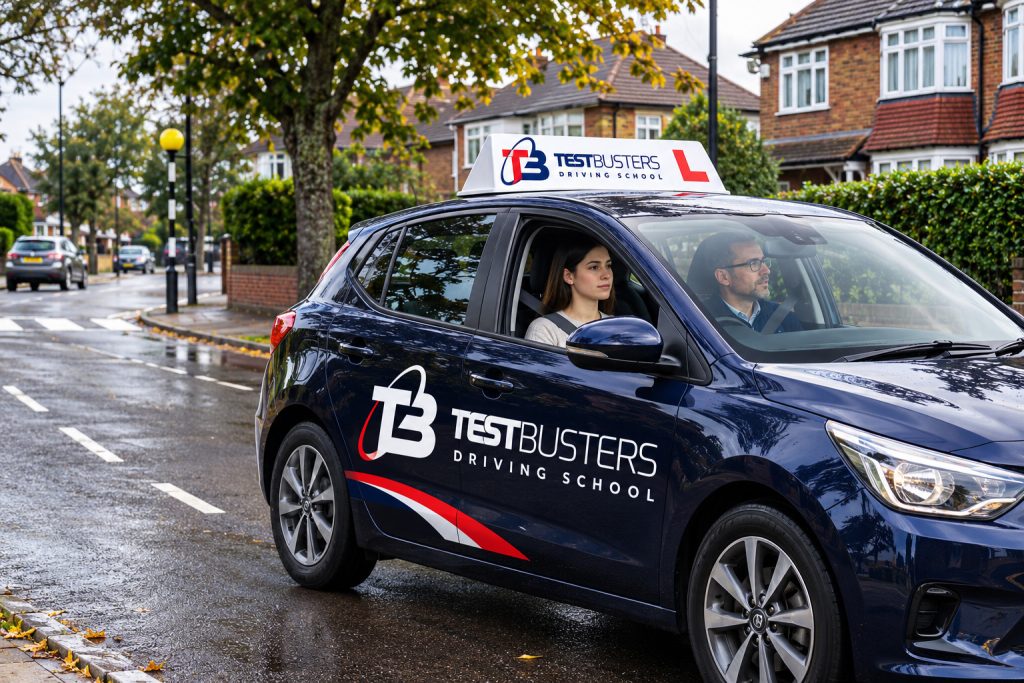
Learning to Drive Safely in Wet Weather
Rain is one of the most common weather conditions drivers encounter in the UK. Even moderate rainfall can affect visibility and road grip, particularly when water accumulates on the road.
During driving lessons, learners should understand several important wet-weather considerations.
Allow More Stopping Distance
Wet roads can increase stopping distances because tyres may have less grip than they would on a dry surface.
Avoid following the vehicle ahead too closely. Leave additional space so you have enough time to react if traffic slows or stops unexpectedly.
Your instructor can help you understand appropriate following distances and how to maintain them in different conditions.
Use Smooth Vehicle Controls
Sudden braking, sharp steering, and aggressive acceleration can make vehicle control more difficult when the road is slippery.
Practise accelerating gradually, braking progressively, and steering smoothly. These habits help maintain stability and make your driving more predictable to other road users.
Watch for Standing Water
Puddles and areas of standing water may hide potholes or uneven road surfaces. Driving through deeper water can also affect vehicle control.
Avoid driving through water when its depth is uncertain. Never take unnecessary risks simply to maintain progress.
Managing Glare and Bright Sunlight
Bright sunlight can make driving unexpectedly difficult, especially when travelling towards a low sun.
Glare may affect your ability to identify road markings, read signs, and recognise hazards early enough.
Learners can develop useful habits to manage these conditions.
- Keep your windscreen clean, both inside and outside.
- Use a suitable sun visor when required.
- Wear prescription sunglasses if appropriate.
- Reduce speed when visibility is affected.
- Increase your attention to pedestrians and vehicles.
- Avoid looking directly into bright sunlight.
Your instructor can explain how to maintain awareness when glare affects your view of the road.
It is also important to understand that sunglasses should not be used if they make visibility worse in changing light conditions. Always prioritise a clear view of the road.
Understanding Reduced Visibility
Fog, heavy rain, mist, and darkness can all make it harder to identify hazards.
When visibility decreases, you may have less time to recognise a developing situation. This makes appropriate speed, observation, and following distance particularly important.
Driving in Foggy Conditions
Fog can reduce the distance you can see ahead and make it difficult to judge the position of other vehicles.
You should:
- Reduce speed to match the available visibility.
- Leave a greater distance from the vehicle ahead.
- Use fog lights only when visibility is seriously reduced, and switch them off when conditions improve.
- Avoid relying entirely on the rear lights of the vehicle in front.
- Be particularly careful near junctions and pedestrian crossings.
Driving After Dark
Night driving introduces different challenges, including reduced visibility, headlight glare, and difficulty judging distances.
Learners should understand how to use headlights correctly, maintain a safe speed, and observe the road beyond the area illuminated by their lights.
Watch carefully for pedestrians wearing dark clothing, cyclists, and vehicles approaching from side roads.
If an approaching vehicle’s headlights cause glare, avoid staring directly into them. Maintain your attention towards the left side of your lane while continuing to observe the road safely.
Adapting to Different Road Surfaces
Road surfaces can vary significantly, even within a short journey. Tarmac, loose gravel, muddy sections, uneven surfaces, and roads with worn markings can all influence driving decisions.
A learner should develop the ability to recognise these changes before they become a problem.
For example, loose gravel may reduce grip, while muddy surfaces can make braking and steering less predictable. Potholes and damaged road sections may require careful positioning, provided it is safe and legal to adjust your path.
During lessons, your instructor can explain how to assess road surfaces and maintain appropriate control without sudden manoeuvres.
Remember that road positioning must always take account of surrounding traffic, cyclists, pedestrians, and road markings.
Managing Traffic When Conditions Become Difficult
Weather and visibility are only part of the challenge. Traffic conditions may also become more demanding when roads are wet, dark, or busy.
A driver needs to remain patient and avoid allowing pressure from other vehicles to influence safe decisions.
Avoid Following Too Closely
In stop-start traffic, it can be tempting to move very close to the vehicle ahead. However, maintaining a suitable gap is important even when vehicles are moving slowly.
This provides room to respond to sudden braking and helps reduce unnecessary pressure.
Be Patient at Junctions
Poor visibility or wet road surfaces may make it harder to assess approaching traffic.
Take enough time to observe the situation and proceed only when it is safe. Never feel pressured into entering a junction because another driver is waiting behind you.
Give Vulnerable Road Users Space
Pedestrians and cyclists may be more difficult to see during rain, darkness, or poor visibility.
Be particularly careful near bus stops, crossings, parked vehicles, and residential streets. Allow appropriate space and avoid passing when there is insufficient room.
Preparing for Seasonal Driving Conditions
The UK experiences different weather patterns throughout the year, and learners should understand how these changes affect everyday journeys.
During autumn: Wet leaves can make some road surfaces slippery. Look ahead for fallen leaves, standing water, and reduced visibility.
During winter: Frost, ice, and cold weather can affect road grip. Drive cautiously, allow more stopping distance, and avoid sudden steering or braking.
During spring: Rain showers and changing light conditions can require adjustments to speed and visibility.
During summer: Bright sunlight, glare, and increased pedestrian activity may create additional challenges, particularly near residential areas and public spaces.
Learning these seasonal considerations can help you prepare for journeys throughout the year rather than becoming comfortable only in favourable weather.
How Driving Lessons in Whitton Can Help
Structured driving lessons provide opportunities to understand how different road conditions affect your driving decisions.
Testbusters Driving School offers instruction across West London, including Whitton. Its DVSA-approved instructors can help learners develop practical skills through guidance suited to their experience and progress.
During your learning journey, you can work on:
- Recognising changes in visibility and road conditions.
- Adjusting speed according to the environment.
- Maintaining suitable stopping distances.
- Improving observation in poor weather.
- Using vehicle lights appropriately.
- Responding calmly to unexpected situations.
- Developing safe driving habits for everyday journeys.
Testbusters provides manual and automatic driving lessons, along with weekly, semi-intensive, and intensive learning options.
You can explore driving lessons in Whitton to learn more about the school’s local training.
Developing Safe Habits Beyond the Driving Test
Passing the practical driving test is an important achievement, but driving safely requires continued awareness and responsible decisions.
Once you begin driving independently, you may experience weather conditions that were not covered extensively during your lessons. You may also travel on unfamiliar roads, drive after dark, or encounter unexpected changes in traffic.
The habits developed during professional instruction can help you manage these situations more effectively.
Continue to assess the road ahead, leave appropriate space, maintain a suitable speed, and avoid unnecessary risks. If conditions become too difficult for you to continue safely, consider stopping somewhere safe until they improve.
Learners who want additional experience in a wider range of driving environments can also ask Testbusters about further training options, including Pass Plus and additional driving courses.
The aim is to become a driver who understands the environment, recognises potential risks, and adjusts their behaviour responsibly.
Conclusion
Learning to adapt to changing road conditions is an important part of becoming a safe and capable driver. Wet roads, bright sunlight, fog, darkness, and uneven surfaces can all affect how you control your vehicle and make decisions.
With professional guidance and consistent practice, you can learn to recognise these challenges, adjust your driving appropriately, and develop habits that support safer journeys throughout the year.
If you are looking for driving lessons in Whitton, Testbusters Driving School can help you build practical driving skills with guidance from DVSA-approved instructors.
Call to Action
Ready to Become a Safer Driver in Whitton?
Start developing the skills you need to handle everyday road conditions with greater confidence. Contact Testbusters Driving School to discuss your lesson requirements and find a suitable learning option.
🚗 Book Your Driving Lessons Today!
📞 Call or WhatsApp: 07813 00 00 02
📧 Email: info@testbusters.co.uk
🌐 Website: https://testbusters.co.uk/
Learn to adapt. Drive responsibly. Stay safe on every journey!
Frequently Asked Questions
1. Can I learn to drive in different weather conditions in Whitton?
Your instructor can help you understand how to adjust your driving for different weather conditions. Lessons take place according to suitable and safe conditions, and instructors can explain how to prepare for rain, glare, fog, and reduced visibility.
2. How should I drive on wet roads?
Reduce speed when necessary, maintain a greater following distance, avoid sudden braking or steering, and use smooth vehicle controls. Always adjust your driving to the road and traffic conditions.
3. Is night driving important for learner drivers?
Night driving can help learners understand headlight use, reduced visibility, glare, and identifying hazards in darkness. Ask your instructor about suitable opportunities for this experience.
4. What should I do when sunlight affects my visibility?
Use your sun visor when appropriate, keep the windscreen clean, reduce speed if necessary, and maintain a safe distance. If glare makes it difficult to see, take extra care and avoid continuing at an unsuitable speed.
5. Does Testbusters offer driving lessons in Whitton?
Yes. Testbusters Driving School includes Whitton in its West London service areas and offers manual and automatic driving lessons. Contact the school on 07813 00 00 02 to discuss lesson availability.