
Good driving begins before you turn the steering wheel. It starts with noticing what is happening around you, recognising what might happen next, and choosing a safe response before a situation becomes difficult. For learners, developing this ability is an important part of becoming a capable and independent driver.
Working with a driving instructor in Richmond can help you understand how to apply these principles on real roads. Every journey presents different challenges: a pedestrian approaching a crossing, a cyclist moving past parked vehicles, a queue forming near a junction, or a car slowing unexpectedly ahead.
Richmond’s mix of residential streets, busy town-centre roads, junctions and routes shared by different road users offers opportunities to practise these skills under professional guidance. At Testbusters Driving School, learners can work towards better observation, thoughtful decision-making and safer driving habits.
Why Thinking Ahead Is an Essential Driving Skill
A driver who only reacts to what is immediately in front of the vehicle may have less time to respond safely. Looking further ahead and scanning the surrounding environment helps you identify developing situations early.
For example, if you notice brake lights several vehicles ahead, you can begin assessing the traffic flow before the queue reaches you. If a ball rolls into the road near a residential street, you can consider whether a child might follow. If a cyclist approaches a line of parked cars, you can anticipate that they may need additional space.
These observations do not mean assuming that something will definitely happen. They help you prepare for reasonable possibilities while remaining focused on the actual road conditions.
A professional driving instructor can explain how to scan effectively, when to check mirrors, and how to adjust speed and position in response to potential hazards. With practice, these decisions can become a more natural part of your driving routine.
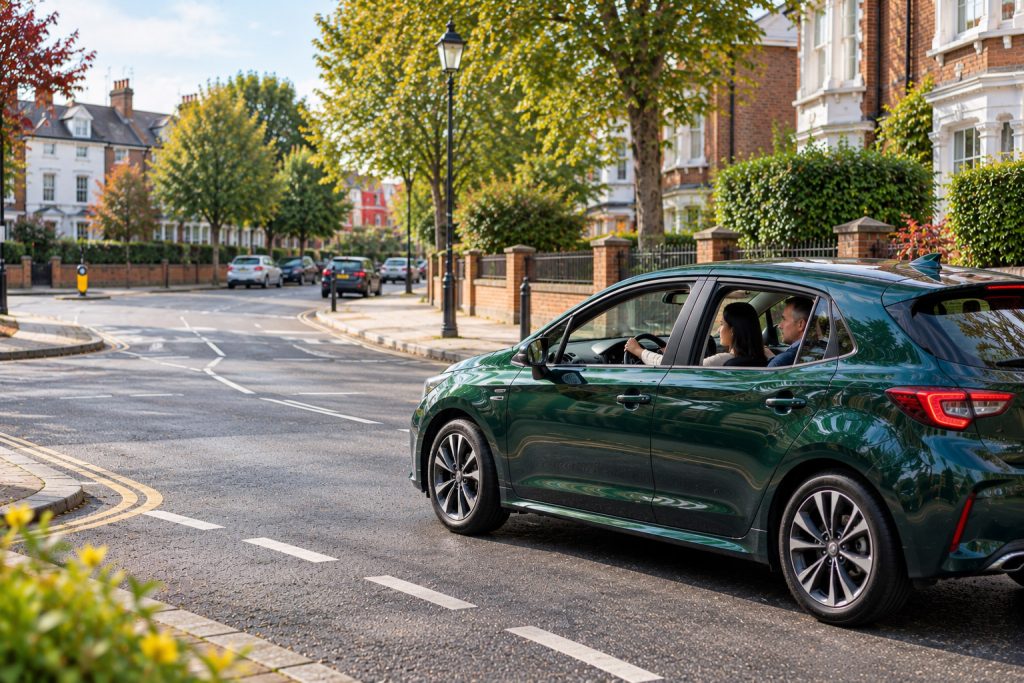
Developing Road Awareness Around Richmond
Learning in and around Richmond can introduce you to a variety of traffic conditions. Your instructor can select suitable roads and situations according to your experience, gradually extending the complexity as your skills develop.
Reading Residential Streets
Residential roads often require careful attention because visibility may be restricted by parked cars, hedges, bends and junctions. Pedestrians can emerge from between vehicles, while approaching vehicles may make it necessary to judge who should proceed first.
During lessons, practise looking into the distance while also monitoring the space close to the car. Notice where your view is blocked and consider what might be hidden from sight. Keep your speed appropriate to the available visibility and leave enough room to respond safely.
Your instructor can help you judge when to proceed, when to wait for an approaching vehicle, and how to position the car without putting other road users under pressure.
Understanding Busy Junctions
At a junction, you need to combine several pieces of information. Road signs and markings indicate the layout, while your observations tell you what traffic is doing and whether a safe opportunity is available.
Rather than concentrating only on finding a gap, assess the overall situation. Check the road layout, look for pedestrians and cyclists, observe approaching vehicles, and consider whether your intended movement is safe.
Some junctions have limited visibility. In these situations, your instructor can guide you through a cautious approach that improves your view while keeping the vehicle under control.
Sharing Space with Cyclists and Pedestrians
Drivers need to account for people who may change speed or direction without much warning. Cyclists may move away from parked cars, pedestrians may approach crossings, and buses may stop to allow passengers to board or leave.
Learn to give vulnerable road users appropriate space, avoid squeezing through narrow gaps, and wait when there is insufficient room to pass safely. Good judgement includes recognising when delaying your journey briefly is the safest option.
Learn to Adjust Your Speed to the Situation
Driving at an appropriate speed is not simply a matter of following the posted limit. You also need to consider visibility, traffic density, road width, weather and the behaviour of other road users.
A road may have a clear view ahead, allowing you to make steady progress. Around a parked vehicle, a bend or a busy junction, you may need to slow down because you cannot see the full situation.
Your instructor can help you recognise when to ease off the accelerator, when to brake progressively, and how to maintain a suitable distance from the vehicle in front. Smooth speed adjustments give you more time to assess what is happening and help make your driving predictable to others.
In wet conditions, stopping distances can increase, so leaving additional space is particularly important. Your driving decisions should always reflect the conditions rather than relying on the same speed for every road.
Build a Reliable Observation Routine
Observation should be purposeful rather than a series of hurried glances. You need to look where the information is useful, check mirrors when appropriate, and keep your attention on the developing road situation.
A useful learning routine includes:
- Look well ahead: Identify traffic queues, road changes, crossings and potential hazards early.
- Check mirrors appropriately: Understand what is behind and beside you before changing speed or position.
- Scan side roads and pavements: Look for vehicles approaching junctions, pedestrians and cyclists.
- Notice road signs and markings: Use them to understand restrictions, direction and priority.
- Review your decisions: After a difficult situation, discuss what you observed and what could be improved.
Your instructor can help you develop these habits without encouraging excessive or unnecessary mirror checks. The aim is to gather relevant information while maintaining proper control and attention.
Turn Mistakes into Practical Learning
Not every lesson will go perfectly. You may misjudge a gap, approach a junction too quickly, overlook a road sign or need a prompt during a manoeuvre. These moments can become useful learning opportunities when you understand the reason behind them.
After a challenging situation, discuss three questions with your instructor: What did you notice? What information did you miss? What could you do differently next time?
For instance, if you entered a roundabout too cautiously because you were unsure about traffic approaching from the right, you might need more practice judging speed and distance. If you approached too quickly, the lesson may focus on planning earlier and reducing speed before reaching the decision point.
The purpose of feedback is to help you recognise patterns and improve your judgement—not simply to memorise an instruction for one particular location.
As your skills progress, you should gradually be able to explain your own decisions and complete familiar tasks with fewer prompts.
Preparing for Independent Driving
Driving lessons should prepare you for situations you may encounter after passing your practical test, including unfamiliar destinations, changing traffic conditions and journeys without an instructor beside you.
You can build independence by taking a more active role in lessons. Ask your instructor to explain the objective of a route, practise following road signs, and review how you responded to unexpected situations. As you improve, you may be able to complete more sections of a lesson with less guidance, where it is safe and appropriate.
Learners who prefer a more concentrated schedule can enquire about an intensive driving course and discuss whether this format suits their experience, availability and learning needs.
You should also learn to recognise your limits. If visibility is poor or a situation feels demanding, reduce the pressure on yourself, reassess the conditions and choose a safe response. Independent driving does not mean acting without caution; it means making responsible decisions using the skills you have developed.
If you are preparing for your practical test, review the requirements for driving test preparation with your instructor. Focus on making each observation, speed adjustment and manoeuvre purposeful rather than concentrating only on the examiner’s instructions.
Finding a Driving Instructor in Richmond
When selecting an instructor, consider whether their teaching approach helps you understand the reasons behind safe driving decisions. Clear explanations, constructive feedback and lessons suited to your current ability can make your practice more productive.
Before booking, you may wish to ask about:
- The instructor’s DVSA-approved status.
- The lesson types available for your experience level.
- How your progress and areas for improvement will be reviewed.
- Available lesson times and scheduling options.
- Whether you can practise a variety of road conditions as your ability develops.
Testbusters Driving School has been established since 1976 and serves learners across West London, including Richmond. The school offers professional instruction and flexible learning options for people at different stages of their driving journey.
Explore driving lessons in Richmond to learn more about local lesson options. Discuss your current experience and goals with the team to find a suitable way to begin or continue your training.
Conclusion
Becoming a confident driver requires more than learning how to operate a car. Developing road awareness, anticipating hazards, managing speed, and making safe decisions are essential skills for everyday driving. With regular practice and professional guidance, you can improve your judgement and become more independent behind the wheel.
Choosing the right driving instructor in Richmond can help you build these skills progressively and prepare for the challenges of real-world driving. Testbusters Driving School supports learners across West London with professional instruction and flexible learning options.
Call to Action
Ready to Learn with a Driving Instructor in Richmond?
Take the next step towards safer, more confident driving with Testbusters Driving School. Build your road awareness, improve your practical skills, and prepare for independent journeys with professional guidance.
🚗 Book your driving lessons in Richmond today!
📞 Call or WhatsApp: 07813 00 00 02
📧 Email: info@testbusters.co.uk
🌐 Website: https://testbusters.co.uk/
Start learning today and build the skills to drive with confidence!
Frequently Asked Questions
1. What does a driving instructor help you learn beyond vehicle control?
An instructor helps you develop observation, hazard awareness, safe positioning, speed management and decision-making. These skills help you respond to different road situations and drive more independently.
2. Can I practise on different types of roads around Richmond?
Your instructor can plan lessons on suitable roads according to your experience and ability. This may include residential streets, junctions, busier routes and roundabouts as you become ready for more complex situations.
3. How can I improve my hazard awareness while learning to drive?
Look well ahead, scan the sides of the road, check mirrors appropriately and consider how other road users might behave. Discuss situations you found difficult with your instructor so you can learn from them.
4. What should I do if I feel overwhelmed during a driving lesson?
Tell your instructor how you feel. They can adjust the lesson, return to a less demanding situation when appropriate, and help you practise the skills you need before progressing.
5. How do I contact Testbusters for driving lessons in Richmond?
Call or WhatsApp Testbusters Driving School on 07813 00 00 02, or email info@testbusters.co.uk to enquire about available lessons and suitable learning options.