
Learning to drive an automatic car can simplify some aspects of vehicle operation, but becoming a capable driver still requires practice, observation and good judgement. Automatic driving lessons Isleworth can help learners understand how their vehicle responds, control its speed smoothly and manage everyday road situations safely.
From moving away at junctions to parking in a restricted space, automatic driving involves more than selecting Drive and pressing the accelerator. Understanding the relationship between the pedals, steering, vehicle movement and surrounding traffic helps you develop a consistent driving technique.
Whether you are a beginner or returning to driving after a break, learning how to control an automatic vehicle can prepare you for a wide range of journeys around Isleworth and West London.
Understanding Your Automatic Car Before Driving
Before moving off, you need to understand the vehicle’s controls and safety features.
Most conventional automatic cars have a gear selector with positions such as Park, Reverse, Neutral and Drive. Some vehicles also include additional driving modes or electronic features that affect how the car responds.
Your instructor should explain the specific vehicle you will use, including its dashboard indicators, parking brake, mirrors, lights and essential safety controls.
A few important principles include:
- Select the correct gear before moving.
- Keep the brake applied while preparing to move off.
- Check mirrors and blind spots when appropriate.
- Understand how the parking brake operates.
- Follow the instructor’s guidance for securing the vehicle.
Learning these procedures before driving helps you build a reliable routine and reduces uncertainty when you encounter unfamiliar situations.
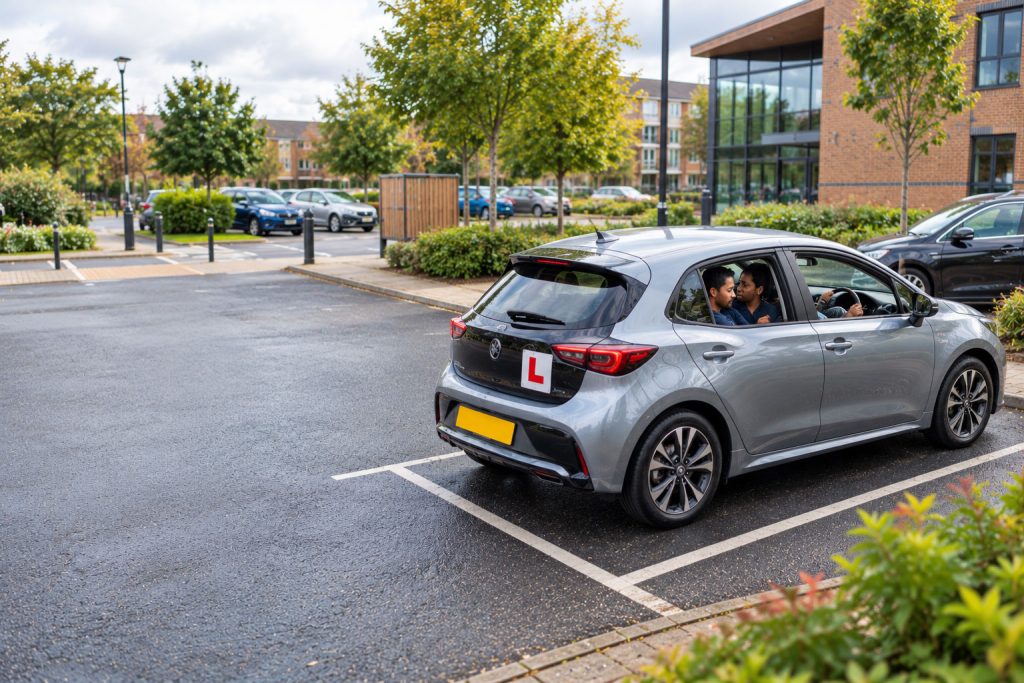
Learn to Brake With Precision
Braking is an essential skill in every automatic vehicle.
Effective braking involves identifying when you need to slow down, applying appropriate pressure and stopping in a controlled manner.
A learner who looks far enough ahead can often recognise slowing traffic, approaching junctions and changing signals earlier. This creates more time to reduce speed gradually rather than braking suddenly.
During automatic driving lessons in Isleworth, you can practise:
- Stopping smoothly at traffic lights.
- Reducing speed before junctions.
- Maintaining safe following distances.
- Slowing down near pedestrian crossings.
- Adjusting speed before bends.
- Responding appropriately to unexpected hazards.
Emergency situations may require firm braking, so your instructor should also explain how to respond safely when immediate action is necessary.
Understand Automatic Creep in Slow Traffic
Some conventional automatic cars move slowly when Drive or Reverse is selected and the brake pedal is released. This behaviour is commonly known as creep.
The response varies between vehicles, especially when comparing conventional automatics with hybrids and electric cars.
Understanding your training vehicle is particularly useful when manoeuvring in tight spaces or moving through slow traffic.
Controlling Movement in Queues
Stop-start traffic requires patience and precise brake control.
Rather than repeatedly accelerating towards the vehicle ahead, learn to observe traffic flow, maintain appropriate space and move only when necessary.
This approach can make your driving smoother and reduce the need for unnecessary braking.
Moving Slowly During Manoeuvres
Parking requires you to control the car at low speeds while observing nearby vehicles, pedestrians and obstacles.
Your instructor can help you understand how small changes in brake pressure affect movement and how to stop accurately when approaching a parking boundary.
The goal is to maintain control throughout the manoeuvre rather than relying on momentum.
Improve Steering and Vehicle Positioning
An automatic transmission reduces the need to coordinate gear changes, but it does not remove the need for accurate steering and road positioning.
You must still judge the available road space, maintain an appropriate position and respond to changes in road layout.
During lessons, practise keeping a suitable distance from parked vehicles, positioning correctly for turns and adjusting your steering smoothly.
Avoid making unnecessary steering corrections. Looking ahead and understanding where you want the vehicle to go can help you make more controlled movements.
Good positioning also supports safer interactions with cyclists, pedestrians and oncoming traffic.
Handle Junctions Without Rushing
Junctions require observation, planning and timely decisions.
As you approach a junction, consider road signs, markings, visibility and the movement of other road users. Reduce your speed appropriately and identify a safe opportunity to proceed.
An automatic car can simplify vehicle operation, but it cannot make these decisions for you.
Your instructor can help you develop a consistent approach to approaching, observing and emerging from junctions.
If your view is restricted, you may need to stop and move forward cautiously when safe to improve visibility. Always remain prepared to stop if another road user creates a hazard.
Develop Parking Skills in an Automatic Car
Parking is an everyday task that benefits from accurate observation and low-speed control.
Automatic driving lessons can help you practise several important manoeuvres.
Parallel Parking
Parallel parking involves positioning the car beside another vehicle or within a marked space, then reversing into the available area.
You need to judge distance, control steering and check the surroundings throughout the manoeuvre.
Rather than memorising a single sequence of movements, aim to understand how the vehicle responds to your steering and how to correct its position safely.
Bay Parking
Bay parking requires you to align the vehicle with the parking markings and remain aware of neighbouring spaces.
Practise entering and reversing into spaces while maintaining control and checking for pedestrians or vehicles nearby.
Pulling Up Safely
Stopping at the side of the road requires attention to road markings, visibility, traffic and restrictions.
Your instructor can help you select a suitable location and position the vehicle safely without obstructing other road users.
Learn to Manage Hills and Slopes
Automatic cars remove the need for manual clutch coordination during hill starts, but controlling the vehicle on a slope still requires care.
Some vehicles provide hill-start assistance or automatic brake-hold functions, while others behave differently.
Your instructor should explain how the training vehicle operates and how to move away without allowing unwanted movement.
When parking on a slope, follow the vehicle manufacturer’s instructions for securing the vehicle, using the parking brake and selecting the appropriate transmission position.
Understanding these procedures helps you manage hills more confidently without relying entirely on electronic assistance.
Adapt to Isleworth’s Changing Road Conditions
Driving around Isleworth may involve residential streets, busier local roads, traffic queues and junctions connecting to surrounding West London areas.
Each environment requires a slightly different approach.
On residential roads, you may need to watch for parked vehicles and pedestrians. In busier traffic, you must monitor surrounding vehicles and maintain safe following distances. At junctions, you need to plan your position and assess whether it is safe to proceed.
Your instructor can gradually introduce different situations as your skills develop.
The objective is not simply to become familiar with a particular route. It is to learn how to adjust your driving when traffic, visibility or road conditions change.
Choose the Right Lesson Schedule
Consistent practice can help you retain what you learn and recognise areas that require further attention.
Weekly lessons may suit learners who prefer gradual progression alongside work or education. More concentrated training may be appropriate for people who can commit additional time to driving.
Testbusters provides different lesson and course options, including intensive training. Contact the school to confirm current availability and discuss which arrangement suits your experience and schedule.
Whatever schedule you choose, make sure you have enough time to understand each skill before moving on to more demanding situations.
Know What an Automatic Driving Licence Allows
Your choice of transmission can affect the vehicles you are permitted to drive after passing your test.
In Great Britain, passing the practical driving test in an automatic car normally gives you an automatic-only driving entitlement. To obtain entitlement to drive manual cars, you will generally need to pass a practical test in a manual vehicle.
Consider your future driving requirements before choosing between automatic and manual tuition.
Automatic lessons may be suitable if you intend to use an automatic car, hybrid or electric vehicle. If you want the flexibility to drive manual vehicles as well, discuss that requirement before beginning your training.
How to Get More From Every Lesson
You can improve your progress by treating each lesson as an opportunity to work on a particular skill.
At the end of a session, ask your instructor which areas are improving and which need more practice.
Useful questions include:
- Am I controlling the accelerator smoothly?
- Do I brake early enough when approaching hazards?
- Is my vehicle positioning accurate?
- Can I manage low-speed manoeuvres independently?
- Am I maintaining suitable distances from other vehicles?
- What should I focus on during the next lesson?
Understanding your strengths and weaknesses helps you make more informed decisions about your learning.
It also encourages you to recognise mistakes and correct them rather than repeating the same actions without understanding the cause.
Learn With Testbusters Driving School
Testbusters Driving School offers driving tuition for learners in Isleworth and surrounding West London areas.
If you want to learn in an automatic car, discuss your current experience, lesson preferences and driving goals with the school.
Professional instruction can help you develop vehicle control, observation, parking techniques and decision-making skills appropriate to your stage of learning.
You can also ask about intensive courses or refresher lessons if you have specific scheduling needs or previous driving experience.
Conclusion
Choosing automatic driving lessons Isleworth is an opportunity to develop the practical skills needed to operate an automatic vehicle safely and smoothly.
Understanding accelerator control, braking, low-speed movement, steering and parking can help you manage everyday driving situations with greater consistency.
Automatic transmission simplifies some vehicle controls, but good driving still depends on observation, anticipation and sound judgement.
With professional instruction and regular practice, you can develop the skills needed for independent driving and become better prepared for journeys around Isleworth and beyond.
Call to Action
Ready to learn automatic driving in Isleworth?
Contact Testbusters Driving School to discuss your requirements and take the next step towards developing practical car-control skills.
Frequently Asked Questions
1. What do automatic driving lessons in Isleworth cover?
Lessons can cover automatic transmission controls, acceleration, braking, steering, junctions, parking, road positioning, hazard awareness and practical driving test preparation.
2. Do automatic cars move when the accelerator is not pressed?
Some conventional automatic cars move slowly when Drive or Reverse is selected and the brake is released. This is known as creep, but vehicle behaviour varies.
3. Can I learn parking manoeuvres in an automatic car?
Yes. You can practise parallel parking, bay parking, low-speed control and safe positioning with guidance from your driving instructor.
4. Can I drive a manual car after passing an automatic driving test?
In Great Britain, passing in an automatic car normally gives you automatic-only driving entitlement. You will generally need to pass a practical test in a manual car to obtain manual entitlement.
5. How can I book automatic driving lessons in Isleworth?
Contact Testbusters Driving School through its website to discuss automatic tuition, instructor availability and suitable lesson arrangements.